**PNP Bipolar Junction Transistor:** The BCP69 uses a PNP structure where current flows from emitter to collector when the base-emitter junction is forward-biased (VBE negative relative to emitter). Holes are injected from the emitter into the base region, and most of these holes are swept across the thin base into the collector, producing collector current proportional to base current (IC = hFE × IB).
**Saturation Operation:** In switching applications, the transistor is driven into saturation by applying sufficient base current (IB > IC/hFE). In saturation, VCE drops to VCE(sat), typically 100-500 mV depending on IC and IB. The BCP69 specifies VCE(sat) = 500 mV max at IC = -1.0 A with IB = -100 mA (forced hFE = 10). Overdriving the base (lower forced hFE) reduces VCE(sat) at the expense of increased base current and slower turn-off.
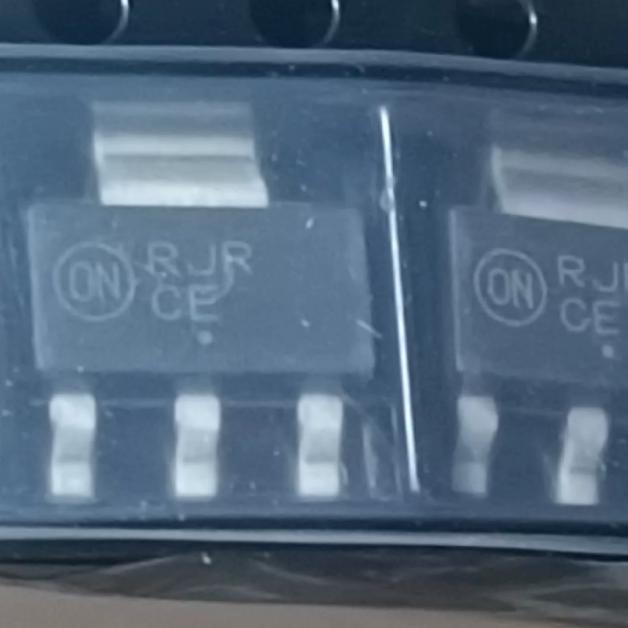
**Thermal Management:** The SOT-223-4 package provides RθJA = 83.3°C/W when mounted on a standard FR4 PCB with a minimum collector pad area of 0.93 sq. in. The 1.5-W power dissipation rating at TA = 25°C corresponds to a junction temperature of approximately 150°C. For reliable operation, junction temperature should be kept below 125°C, limiting practical dissipation to about 1.2 W at ambient temperatures up to 50°C.
**Darlington Alternative:** When higher current gain is needed, the BCP69 can be used as the output transistor in a Darlington configuration with a small-signal PNP pre-driver, achieving effective hFE > 1000 at 1 A.





 English
  简体中文
简体中文  Español
  العربية