MSP430F5324IRGCR


16-bit MSP430, 64KB Flash, 6KB SRAM, 12-bit ADC, 0.18µA LPM4.5, 3.5µs wake-up, VQFN-64, 1.8-3.6V

4000

Effective Inventory
Go to Inquiry

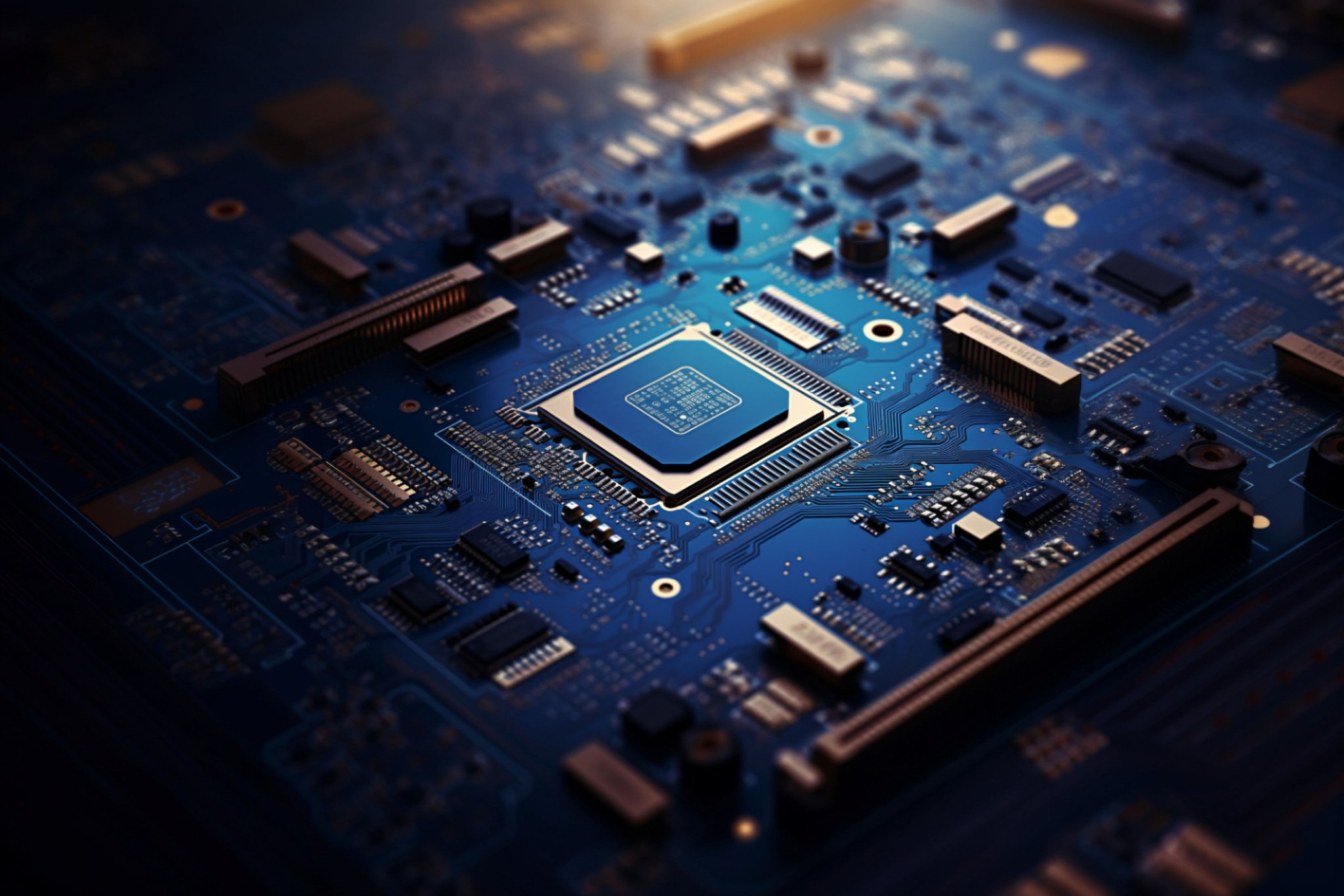
Image for reference only

Manufacturer Part:

MSP430F5324IRGCR

Package:

VQFN-64 (RGC) (9.0 x 9.0 x 0.95 mm, 0.5mm pitch, exposed pad)

Brand:
Other recommendations you may be interested in.
Description

The MSP430F5324IRGCR from Texas Instruments is a 16-bit ultra-low-power MSP430 MCU in a 64-pin VQFN (9×9 mm) package. Key specs include 25-MHz CPU, 64-KB Flash, 6-KB SRAM, 12-bit SAR ADC (10 channels), 8 comparators, hardware multiplier (32-bit), 3-channel DMA, 2 USCI modules (each supporting UART/SPI and I2C), 4 16-bit timers (Timer_A ×3, Timer_B ×1), 47 GPIOs, and RTC with alarm. Operating voltage is 1.8 V to 3.6 V. Power consumption: 290 µA/MHz active (Flash), 1.9 µA standby (LPM3 with RTC), 0.18 µA shutdown (LPM4.5), with 3.5-µs wake-up from standby. Industrial temperature range -40°C to +85°C.

The MSP430F5324 is a member of TI’s MSP430F532x family of ultra-low-power 16-bit mixed-signal microcontrollers. The ‘5324’ variant provides 64-KB Flash, 6-KB SRAM, and 47 I/O pins in a 64-pin VQFN package, positioned as a mid-range device between the smaller 28-pin and larger 80-pin family members.

The MSP430 architecture is optimized for low-power operation through a combination of flexible clock management, multiple low-power modes, and an integrated LDO. The unified clock system includes a digitally controlled oscillator (DCO) for fast wake-up (3.5 µs from standby), a FLL for frequency stabilization, a 32-kHz crystal oscillator (XT1) for RTC, and a high-frequency crystal oscillator (XT2) up to 32 MHz. The on-chip LDO regulates the core supply, allowing the device to run from a single 1.8-V to 3.6-V supply.

The five low-power modes are the hallmark of the MSP430. Active mode draws 290 µA/MHz from Flash (150 µA/MHz from RAM). LPM3 (standby with RTC, WDT, and supply supervisor active) draws only 1.9 µA at 2.2 V. LPM4 (off mode with RAM retention and supply supervisor) draws 1.1 µA. LPM4.5 (shutdown with no RAM retention) draws just 0.18 µA — approaching the self-discharge rate of a coin cell battery.

The two USCI modules each support dual-protocol operation: USCI_A provides UART (with auto-baud detection) and SPI, while USCI_B provides I2C and SPI. This allows simultaneous UART + I2C, or SPI + I2C, or any combination. The 12-bit ADC includes an internal reference, sample-and-hold, and auto-scan for sequential channel sampling without CPU intervention.

The hardware multiplier supports 32-bit operations (32×32 → 64-bit result) in a single instruction cycle, accelerating DSP-like algorithms. The 3-channel DMA offloads memory transfers from the CPU, enabling ADC-to-RAM or UART-to-RAM transfers with zero CPU overhead.

Typical applications include battery-powered data loggers, wireless sensor nodes, portable medical instruments, and smart metering systems where ultra-low quiescent current and fast wake-up are essential for extending battery life.


**MSP430 CPU Core:** The MSP430 uses a 16-bit RISC architecture with 16-bit registers and a constant generator for efficient instruction encoding. The 27 core instructions handle most operations; additional emulated instructions provide convenience. The Von Neumann architecture uses a single address space for Flash, SRAM, and peripherals. The CPU runs at up to 25 MHz with single-cycle register-to-register operations.

**Unified Clock System (UCS):** The UCS manages four clock sources: XT1 (32-kHz crystal), XT2 (high-frequency crystal up to 32 MHz), DCO (digitally controlled oscillator, fast start), and VLO (low-frequency internal, 10 kHz typical). The FLL multiplies the 32-kHz reference to generate a stable MCLK and SMCLK. The DCO starts in microseconds, enabling the 3.5-µs wake-up from LPM3.

**Low-Power Modes:** Five low-power modes trade off functionality vs. power. LPM0 keeps SMCLK running (timer-based events). LPM3 keeps only ACLK (32 kHz) and RTC active (periodic wake-up). LPM4 disables all clocks but retains SRAM (interrupt wake-up). LPM4.5 disables the LDO entirely, losing SRAM content but achieving 0.18 µA (reset wakeup). The key design principle: spend most time in deep sleep, wake briefly to take measurements, then return to sleep.

**USCI Communication:** Each USCI module uses a shared shift register with separate baud-rate generators for UART and I2C/SPI modes. Switching between protocols requires reconfiguration but not a hardware change. The UART supports auto-baud detection for unknown baud rates. I2C supports master/slave with multi-master arbitration and clock stretching.

Pin Group Count Key Functions Notes
Power (DVCC/DVSS) 4 pairs 1.8-3.6V digital supply; AVCC/AVSS for analog Bypass each DVCC with 0.1µF ceramic; AVCC powers ADC and comparators
PORT1 (P1.0-P1.7) 8 GPIO with interrupt; TA0 CCR0-4; ADC A0-A7; comparator inputs; TMS/TCK (JTAG) P1.0 can output ACLK; P1.2/P1.3 are USCI_B0 I2C default pins
PORT2 (P2.0-P2.7) 8 GPIO with interrupt; TA1 CCR0-2; ADC A8-A9; comparator outputs; TDI/TDO (JTAG) P2.0 can output SMCLK; P2.4/P2.5 are USCI_A0 UART default
PORT3 (P3.0-P3.7) 8 TA0 outputs; USCI_A0 SPI (UCA0CLK/SIMO/SOMI); USCI_B0 SPI Port 3 handles most SPI pin assignments for both USCI modules
PORT4 (P4.0-P4.7) 8 TA2 CCR0-2; TB0 outputs; XT1 crystal pins; ADC A10-A12 P4.0/P4.1 are XT1 IN/OUT (32kHz crystal); P4.2-P4.4 are TB0 outputs
PORT5-11 15 USCI_A1 (UART/SPI); USCI_B1 (I2C/SPI); XT2 crystal; additional ADC; DMA control Provides second USCI port pins; XT2 on P5.2/P5.3 for high-freq crystal
RST/NMI 1 Reset / non-maskable interrupt; active low; internal pull-up External pull-up and decoupling cap recommended for clean reset
Application Description
Battery-Powered Data Logger Wake from LPM3 on RTC alarm (1.9µA standby); sample ADC channels via auto-scan; store in SRAM via DMA; transmit via UART/I2C when buffer full; 0.18µA LPM4.5 for long idle; coin-cell operation for years
Wireless Sensor Node LPM3 between radio transmissions; hardware multiplier for CRC/RSSI calculation; USCI_A for UART to radio module; USCI_B for I2C sensors; 3.5µs wake-up enables responsive event detection
Portable Medical Instrument 12-bit ADC for biosignal acquisition; comparators for threshold detection; DMA offloads ADC-to-RAM transfer; RTC timestamps readings; wide voltage (1.8-3.6V) for direct lithium cell operation
Model Manufacturer Compatibility Key Difference
MSP430F5329IPN TI Series Upgrade 128-KB Flash / 8-KB SRAM; 80-pin LQFP; 63 I/O; same peripherals; more memory and pins; use when 64KB Flash is insufficient
MSP430F5328IZQE TI Series Alternative 64-KB Flash / 6-KB SRAM; 80-pin BGA (5x5mm); same peripherals; smaller footprint; use for ultra-compact designs
MSP430F5524IRGCR TI Functional Upgrade Same VQFN-64 pinout; adds USB 2.0 PHY; 64-KB Flash / 4-KB SRAM; use when USB connectivity required
STM32L052C8T6 ST Competitive Alternative 32-bit ARM Cortex-M0+; 64-KB Flash / 8-KB SRAM; USB 2.0; 12-bit ADC; LQFP-48; 0.27µA standby; use when 32-bit performance preferred
Recommend Parts
PMIC for AM335x, 3 bucks, 2 LDOs, battery charger, WLED, I2C, VQFN-48

Brand:

Package:

VQFN-48 (6×6 mm, 0.4 mm pitch)
In stock:
8909pcs

Cargo cycle: 3~7 Days
The minimum order is 1

Go to Inquiry
Octal D-type flip-flop, edge-triggered, async clear, 28MHz, SOP-20

Brand:

Package:

SOP-20 (NS) (12.6×7.8 mm)
In stock:
8359pcs

Cargo cycle: 3~7 Days
The minimum order is 1

Go to Inquiry
3-to-8 decoder/demux, active-low outputs, 3 enable inputs, 15ns, PDIP-16

Brand:

Package:

PDIP-16 (24.33×9.4 mm, Through-Hole)
In stock:
11952pcs

Cargo cycle: 3~7 Days
The minimum order is 1

Go to Inquiry
2W mono Class-AB audio amp, BTL speaker + SE headphone, 2.5-5.5V, HVSSOP-8

Brand:

Package:

HVSSOP-8 (DGN) (3.0×4.9 mm, PowerPAD)
In stock:
3337pcs

Cargo cycle: 3~7 Days
The minimum order is 1

Go to Inquiry
10/100 Ethernet PHY, MII/RMII/SNI, Auto-MDIX, 270mW, LQFP-48, commercial

Brand:

Package:

LQFP-48 (7×7 mm)
In stock:
14754pcs

Cargo cycle: 3~7 Days
The minimum order is 1

Go to Inquiry
Octal bus transceiver, 3-state outputs, 2-6V, 12ns tpd, TSSOP-20

Brand:

Package:

TSSOP-20 (6.5×6.4 mm)
In stock:
2638pcs

Cargo cycle: 3~7 Days
The minimum order is 1

Go to Inquiry
Quality Assurance

All electronic components we source from our partnered supply chains go through strict incoming inspections.Through careful testing, we ensure everything delivered to customers is genuine original parts and meets quality requirements.In addition, we keep complete inspection records to make the entire supply chain process clear and traceable.

Certification
We have obtained a number of professional certifications and built our own professional testing laboratory.This ensures that every product we deliver to our customers meets the highest quality requirements.We conduct tests in strict accordance with procedures to ensure stable product quality and accurate parameters.To guarantee genuine original parts, we also cooperate with reliable third-party testing institutions for strict quality inspection.We always attach great importance to quality and fully comply with industry standards, relevant regulations, and ISO 9001:2015 requirements.

Shipping & Payment

All electronic components we source from our partnered supply chains go through strict incoming inspections.Through careful testing, we ensure everything delivered to customers is genuine original parts and meets quality requirements.In addition, we keep complete inspection records to make the entire supply chain process clear and traceable.

Certification
We have obtained a number of professional certifications and built our own professional testing laboratory.This ensures that every product we deliver to our customers meets the highest quality requirements.We conduct tests in strict accordance with procedures to ensure stable product quality and accurate parameters.To guarantee genuine original parts, we also cooperate with reliable third-party testing institutions for strict quality inspection.We always attach great importance to quality and fully comply with industry standards, relevant regulations, and ISO 9001:2015 requirements.

Service & Packaging

All electronic components we source from our partnered supply chains go through strict incoming inspections.Through careful testing, we ensure everything delivered to customers is genuine original parts and meets quality requirements.In addition, we keep complete inspection records to make the entire supply chain process clear and traceable.

Certification
We have obtained a number of professional certifications and built our own professional testing laboratory.This ensures that every product we deliver to our customers meets the highest quality requirements.We conduct tests in strict accordance with procedures to ensure stable product quality and accurate parameters.To guarantee genuine original parts, we also cooperate with reliable third-party testing institutions for strict quality inspection.We always attach great importance to quality and fully comply with industry standards, relevant regulations, and ISO 9001:2015 requirements.