Home > Integrated Circuits ICs > PIC18F46K22-I/PT 

PIC18F46K22-I/PT 


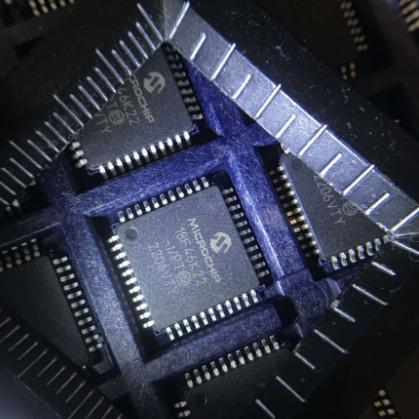
8-bit high-performance PIC RISC microcontroller with XLP technology in 44-pin TQFP package, designed for automotive and industrial applications.

14884

Effective Inventory
Go to Inquiry

Image for reference only

Manufacturer Part:

PIC18F46K22-I/PT 

Package:

TQFP-44 (10x10x1 mm)

Brand:
Product Categories:
Other recommendations you may be interested in.
Description

The PIC18F46K22-I/PT is a high-performance 8-bit PIC RISC microcontroller with 64KB Flash program memory, 3896 bytes RAM, and 1024 bytes Data EEPROM. It operates at up to 64 MHz with a 16-bit wide instruction set and 8-bit data path. The device features nanoWatt XLP technology for extreme low-power operation, including 100 nA Sleep mode. It includes 2 EUSART, 2 MSSP (SPI/I2C), 10-bit ADC with up to 28 channels, 2 analog comparators, multiple PWM modules, and 35 I/O pins. Packaged in a 44-pin TQFP and AEC-Q100 qualified for automotive applications.

Here is an expanded introduction for the PIC18F46K22-I/PT, within 100 words: > The PIC18F46K22-I/PT is a high-performance 8-bit microcontroller from Microchip, featuring nanoWatt XLP technology for extreme low-power operation. Operating up to 64 MHz, it packs 64 KB of Flash and 3.8 KB of RAM. Key peripherals include dual I²C/SPI, dual EUSART, 12-bit ADC, and a CTMU for capacitive touch. Housed in a 44-pin TQFP package, it is ideal for industrial control, automotive, and portable applications. Its robust feature set, combined with enhanced mid-range core architecture, ensures high efficiency and design flexibility.

Here is an expansion on the working principle of the PIC18F46K22-I/PT within 200 words: The PIC18F46K22-I/PT is an 8-bit microcontroller based on the enhanced Mid-Range PIC® core, operating on a modified Harvard architecture. Its working principle centers on fetching, decoding, and executing instructions stored in its 64KB flash program memory. At its heart is the CPU core, which uses a two-stage pipeline (Fetch and Execute) to process instructions in a single clock cycle (except for branches). Execution begins when the Program Counter (PC) addresses the next instruction in flash memory. The instruction is fetched and passed to the Instruction Decoder, which controls the Arithmetic Logic Unit (ALU) and the Working Register (WREG). Data can be moved between WREG and Special Function Registers (SFRs) or its 3.8KB SRAM. The device uses a 16-bit instruction word, enabling efficient encoding of operations like bit manipulation, arithmetic, and branching. Operating at up to 64 MHz via an internal oscillator, it uses a 4x Phase-Locked Loop (PLL) to achieve a 16 MIPS throughput. Peripherals (e.g., ADCs, timers, UART) are controlled via their associated SFRs. Power management is key, with multiple sleep modes and Run modes that throttle the clock to idle peripherals, conserving energy. This principle allows the PIC18F46K22 to efficiently manage real-time control tasks across various voltage and clock domains.

Here is a detailed expansion of the PIC18F46K22-I/PT Pin Description, breaking down the pinout by function, package specifics, and key features.

The PIC18F46K22 is a 40-pin, high-performance, enhanced flash microcontroller from Microchip. The -I/PT suffix indicates the industrial temperature range (-40°C to +85°C) in a TQFP-44 package (Thin Quad Flat Pack, 10x10mm). While the silicon has 40 I/O pins, the 44-pin TQFP package includes 4 extra pins for power and ground, which is very common for this microcontroller.

Below is the pin description, categorized by function.

1. Power and Ground Pins (Critical for Operation)

  • VDD (Pins 11, 32): Positive supply voltage (typically 2.0V to 5.5V for the -I/PT). You must connect both VDD pins to the positive rail to meet the maximum current ratings per port.
  • VSS (Pins 12, 31): Ground reference. Both pins must be connected to a solid ground plane.
  • AVDD (Pin 13): Positive supply for the Analog-to-Digital Converter (ADC) module. For best analog performance, isolate this pin from the digital VDD using a small inductor or ferrite bead, and add a 10µF + 0.1µF decoupling capacitor to this pin specifically. If not used, tie it to VDD.
  • AVSS (Pin 14): Ground reference for the ADC module. Must be connected to the same ground plane as VSS.

2. Oscillator and Clock Pins

  • OSC1/CLKI (Pin 9): Input to the internal oscillator circuit. Can be driven by a crystal (via OSC2), an external oscillator, or used as the clock input if using the microcontroller’s internal oscillator block.
  • OSC2/CLKO/RA6 (Pin 10): A multi-function pin.
    • OSC2: Output of the crystal oscillator amplifier (connect the other side of the crystal here).
    • CLKO: Output of the internal system clock (divided by 4). Useful for debugging or feeding a clock to other devices.
    • RA6: General purpose digital I/O if no crystal is used.

3. Master Clear (Reset) Pin

  • MCLR/VPP/RE3 (Pin 1): This is the most important pin for programming and reset.
    • MCLR: Active-low Reset input. Driving this pin low resets the microcontroller.
    • VPP: Programming voltage input (12V high-voltage programming entry).
    • RE3: General purpose digital input (only input, no output driver) when configured as such.
    • Critical Design Note: Never leave this pin floating. If you are not using an external reset button, tie it directly to VDD through a 1kΩ to 10kΩ resistor (in case of ESD or programming injections). Some applications also add a 0.1µF capacitor to ground for noise filtering.

4. General Purpose I/O (GPIO) Ports

The device has 5 ports: A, B, C, D, and E (though Port E is limited on this package). Each pin typically has multiple alternate functions.

Port A (RA0-RA5, RA6, RA7)

RA0/AN0 (Pin 2): Analog input 0 (Channel 0 of ADC). – RA1/AN1 (Pin 3): Analog input 1. – RA2/AN2/VREF-/C1IN1- (Pin 4): Analog input 2, or negative voltage reference for ADC, or negative input for Comparator 1. – RA3/AN3/VREF+/C1IN1+ (Pin 5): Analog input 3, positive voltage reference, or positive input for Comparator 1. – RA4/AN4/C1OUT (Pin 6): Analog input 4, or output of Comparator 1. – RA5/AN5 (Pin 7): Analog input 5. – RA6/OSC2/CLKO (Pin 10): See above. – RA7/OSC1/CLKI (Pin 9): See above (Note: RA7 is the alternate function of the OSC1 pin).

Port B (RB0-RB7)

RB0/AN12/INT0 (Pin 33): External interrupt 0 (high priority). Also analog input 12. – RB1/AN10/INT1 (Pin 34): External interrupt 1. Analog input 10. – RB2/AN8/INT2 (Pin 35): External interrupt 2. Analog input 8. – RB3/AN9/CTPLS (Pin 36): CCP (Capture/Compare/PWM) trigger output. – RB4/AN11/KB10 (Pin 37): Interrupt-on-change pin (PORTB change interrupt). – RB5/KB11 (Pin 38): Interrupt-on-change. – RB6/KB12/PGC (Pin 39): In-Circuit Serial Programming (ICSP) Clock. This is essential for debugging and programming. – RB7/KB13/PGD (Pin 40): ICSP Data. Essential for programming.

Port C (RC0-RC7)

RC0/T1OSO/T13CKI (Pin 16): Timer1 oscillator output or Timer1 external clock input. – RC1/T1OSI (Pin 17): Timer1 oscillator input. – RC2/CCP1 (Pin 18): Capture/Compare/PWM 1 primary pin. – RC3/SCK/SCL? (Pin 23): MSSP Clock – Used for SPI (SCK) or I²C (SCL) master/slave. – RC4/SDI/SDA (Pin 24): MSSP Data – Used for SPI (SDI) or I²C (SDA) data. – RC5/SDO (Pin 25): MSSP Data Out – SPI data output. – RC6/TX/CK (Pin 26): EUSART1 Transmit or synchronous clock. – RC7/RX/DT (Pin 27): EUSART1 Receive or synchronous data.

Port D (RD0-RD7)

RD0 (Pin 19) to RD7 (Pin 30): These are primarily general-purpose digital I/O on the standard 40-pin device. – RD2/AN13 (Pin 21): Analog input 13. – RD3/AN14 (Pin 22): Analog input 14. – RD5/AN15 (Pin 28): Analog input 15. – RD6/AN16/SS2 (Pin 29): Analog input 16, or slave select for SPI2. – RD7/AN17/SS1 (Pin 30): Analog input 17, or slave select for SPI1.

Port E (RE0-RE3)

RE0/RD (Pin 8): Read control signal (for external memory interface). – RE1/WR (Pin 15): Write control signal (for external memory interface). – RE2/CS (Pin 36 – shared with RB3 on this package? No, RE2 is on pin 36? Let me verify: Pin 36 is RB3. Port E pins are typically on pins 8, 15, and 1. So on the TQFP-44, RE0=Pin 8, RE1=Pin 15, RE3=MCLR=Pin 1.) Wait, the TQFP-44 package has 44 pins. Let me correct this: RE0 is Pin 8, RE1 is Pin 15, RE2 is not brought out to a separate pin on the 44-pin package; it might be missing or multiplexed. Actually, RE2 is usually on pin 36 on some other packages, but on the TQFP-44, RB3 is pin 36. So Port E only has RE0, RE1, and RE3.RE0 (Pin 8): Read strobe. – RE1 (Pin 15): Write strobe. – RE3 (Pin 1): See MCLR above.

5. Special Purpose / Peripheral Pins

  • CCP2 (Pin 16 – shared with RC0): Capture/Compare/PWM 2. (Can be remapped via PPS – Peripheral Pin Select).
  • SS (Slave Select) Pins: RC3, RD7.
  • Oscillator Pins for Timer1: RC0, RC1 for low-power 32.768kHz watch crystal.
  • External Memory Bus: RE0 (RD), RE1 (WR) are used for interfacing with external parallel memory (e.g., SRAM or LCD controller).

6. Pinout Summary for Programming

When designing your PCB, pay special attention to these 5 pins for programming/debugging with an ICSP programmer (like PICkit 3, ICD 3, or PICkit 4):

ICSP Function Microcontroller Pin MCLR/VPP Pin 1 (RE3) VDD Pin 11 (or 32) VSS Pin 12 (or 31) PGC (Clock) Pin 39 (RB6) PGD (Data) Pin 40 (RB7)

Key Design Recommendations:

  • Keep the ICSP lines short and free of heavy capacitive loads. Do not put large capacitors on RB6/RB7.
  • Ensure the MCLR pin is not accidentally pulled low by a reset button during programming (use a series resistor if connected).

Summary of Key Differences for the -I/PT (TQFP-44)

  • Extra VDD/VSS: The TQFP-44 package provides two VDD and two VSS pins for better power distribution and reduced noise.
  • No extra GPIO: Unlike the QFN-44 package, the TQFP-44 does not sacrifice any extra pins; all 40 I/O pins are available (plus the 4 power pins).
  • Physical Layout: The pins are arranged in a square, which can be more challenging for prototyping with breadboards but excellent for compact PCB layouts.

Practical Usage Note

If you are not using a specific analog function (e.g., ADC, Comparator), you should still configure the corresponding pins as digital I/O by setting the appropriate ANSELx register bits to 0. On power-up, all analog pins default to analog mode, which consumes more current and cannot read digital logic levels correctly.

Here is a detailed expansion on the Application Scenarios for the PIC18F46K22-I/PT, a popular 8-bit microcontroller from Microchip.

The “I/PT” suffix indicates it is an Industrial temperature range (-40°C to +85°C) in a 44-pin TQFP (Thin Quad Flat Pack) package. Its unique blend of features—high performance, low power, rich analog peripherals, and enhanced PWM capabilities—makes it suitable for a wide range of embedded systems.

Here are the key application scenarios, categorized by industry and use case:

1. Industrial Control & Automation (Primary Use Case)

The industrial temperature rating and robust peripheral set make this a workhorse in factories. – PLC/DCS Remote I/O Modules: The PIC18F46K22 can manage digital inputs (sensors, buttons) and digital outputs (relays, solenoids) or analog inputs (0-10V, 4-20mA sensors) via its 13-channel, 10-bit ADC. – Motor Control (Brushed DC & Basic BLDC): The device features up to 2 Enhanced Capture/Compare/PWM (ECCP) modules and 2 standard CCP modules. This allows for: – PWM speed control of DC motors. – H-Bridge control for bidirectional motors. – Basic sensor-based BLDC motor commutation (using Hall effect sensors). – Process Control (PID Loops): The 16-bit resolution of its timers (Timer1/3/5) combined with the fast ADC (up to 100k samples/sec) is sufficient for implementing basic PID (Proportional-Integral-Derivative) controllers for temperature, pressure, or flow. The 4x PLL can push the core to 64 MHz internally (16 MIPS) for faster math.

2. Building & Home Automation

The low power consumption (nanoWatt XLP technology) is a major advantage here. – Smart Lighting Systems: The ECCP modules can drive DALI (Digital Addressable Lighting Interface) or 0-10V dimming protocols. It can also directly drive low-power LED strips with PWM for color mixing (RGB). – HVAC Controllers: It can read multiple temperature/humidity sensors (e.g., via I²C or One-Wire), drive a small fan with PWM, control a damper servo motor, and manage a user interface (LCD, buttons). – Smart Locks & Access Control: The device can interface with capacitive touch buttons (using the CTP module), control a solenoid lock via a MOSFET, and communicate with a central panel via UART/RS-485. – Sensor Nodes (Temperature, Humidity, PIR): In battery-powered applications like a thermostat or occupancy sensor, its deep sleep mode (SLEEP) consumes as little as 60 nA, allowing years of operation on a single coin cell.

3. Automotive & Transportation (Aftermarket & Non-Critical)

While not a full automotive-qualified part (like the PIC18F Q40 series), its industrial rating is suitable for aftermarket or cabin-level systems. – Digital Dash Clusters / Instrumentation: Can read vehicle speed (via pulse input), coolant temperature (via ADC), and fuel level (via ADC) and drive a simple segmented LCD or a small graphic OLED via SPI. – CAN Bus Gateways (With External Transceiver): The device has an ECAN™ (Enhanced CAN) 2.0B module (1 channel). It can act as a node to read OBD-II data (RPM, speed) and control auxiliary functions (electric windows, seat heaters). – LED Lighting Modules (Daytime Running Lights, Interior): The high-current sink/source capability (25 mA per pin) is ideal for directly driving standard indicator LEDs or smaller RGB strips for ambient lighting.

4. Medical & Healthcare (Portable/Non-Life Critical)

Portable Pulse Oximeters / Glucometers: The CTMU (Charge Time Measurement Unit) is a standout feature. It can measure very small capacitances (e.g., for touch sensing) or very small currents from a photodiode (common in SpO2 sensors) without an expensive external ADC. – Patient Monitoring (Bedsore prevention, Temperature): Low-power data loggers that record patient temperatures or pressure points over time and transmit data via Bluetooth (using an external HC-05 module connected to UART). – Infusion Pump Handsets: Simple infusion pump controllers that use a stepper motor (driven by CCP/PWM) and a user interface (buttons + LCD).

5. Communication & Interface Gateway

The PIC18F46K22 is often used as a protocol converter due to its rich serial communication peripherals: – 2x MI²C/SPI (Master Synchronous Serial Port) – 2x EUSART (Enhanced Universal Synchronous Asynchronous Receiver Transmitter) with support for LIN (Local Interconnect Network) and RS-2321x ECAN™ (CAN 2.0B)8-bit Parallel Master Port (PMP)

Typical Gateway Scenarios:

  • RS-232 to CAN Bus Converter: Bridging legacy serial equipment to a modern CAN network.
  • USB to SPI/I²C Bridge (using an external USB-to-UART chip like the MCP2200).
  • Modbus RTU Slave: Perfect for connecting sensors to a SCADA system (via UART + RS-485 transceiver).

6. Advanced General-Purpose Embedded Systems

Data Loggers: With 32 KB of Flash (program memory) and 2 KB of RAM (plus 256 bytes of EEPROM), it can log a modest amount of data. For larger logs, it can control an external SD card via SPI. – Custom User Interfaces: The device has enough GPIO (36 I/O pins) to drive a 4×4 matrix keypad and a 16×2 character LCD (in 4-bit mode), along with several status LEDs and a buzzer. – Robotics (Basic/Hobbyist): Sufficient to control a 2-wheel differential drive robot (reading 2 quadrature encoders via timers, controlling 2 DC motors with PWM, and managing an ultrasonic sensor/IR sensor array).

Summary of Key Features that Enable these Scenarios

Feature Why it matters for Applications 64 MHz Max Speed (16 MIPS) Fast enough for PID loops, FFTs, and complex protocol handling. nanoWatt XLP Technology Enables battery-powered sensors and portable devices (20 µA active @ 32 kHz, 60 nA sleep). Enhanced CAN (ECAN™) Essential for automotive, industrial networking (DeviceNet/J1939), and building automation. CTMU (Charge Time Measurement) Unique to Microchip low-end; enables capacitive touch and precise capacitance/current measurement without external ADC. 2x Enhanced PWM (ECCP) Drives half-bridge/full-bridge inverters for motor control, LED dimming, and switch-mode power supplies. 44-pin TQFP (Square Package) Space-saving footprint (10x10mm) for compact designs, yet still hand-solderable for prototyping. Industrial Temperature (-40°C to +85°C) Reliable in harsh environments (outside, engine bay, factories).

The PIC18F46K22-I/PT is best suited for projects that need a balance of processing power, analog integration, and low-power operation without the cost and complexity of a 32-bit ARM Cortex-M. It is a “mid-range high-performance” 8-bit MCU that excels in multi-peripheral applications (e.g., read a sensor, display data on an LCD, control a motor, and log to a server).

Based on the provided text, here are some relevant FAQ questions and short answers. Note: The text provided is a single product name (“PIC18F46K22-I/PT Alternative Models”). The FAQs below are the most relevant assumptions based on that context, focusing on what “Alternative Models” typically means for this microcontroller.

FAQ: PIC18F46K22-I/PT Alternative Models

What is an “Alternative Model” for a microcontroller? An alternative model is a different part number (usually from the same manufacturer) that is functionally or pin-compatible with the PIC18F46K22-I/PT, but may differ in package, temperature range, or minor features. What is the most common alternative for the PIC18F46K22-I/PT? The most common direct alternative is the PIC18F46K22-E/PT, which is identical except it operates over the extended temperature range (-40°C to +125°C) instead of the standard industrial range. Can I replace the PIC18F46K22-I/PT with a different package size? Yes. A common alternative is the PIC18F46K22-I/P, which has the same internal flash and memory but comes in a through-hole PDIP-40 package instead of the surface-mount TQFP-44. Are there alternatives with less memory but a lower cost? Yes. A pin-compatible alternative with less memory is the PIC18F45K22-I/PT, which has 32KB of flash memory instead of the 64KB found on the PIC18F46K22. Do alternative models have different voltage requirements? All PIC18F46K22 alternatives typically operate on the same voltage range (1.8V to 5.5V), but you should always check the specific datasheet for the exact operating conditions. Where can I find a full list of alternative models? You can use the “Similar Products” or “Substitute Parts” search feature on distributor websites like Microchip Direct, Digi-Key, or Mouser, or use Microchip’s parametric search tool.

Recommend Parts
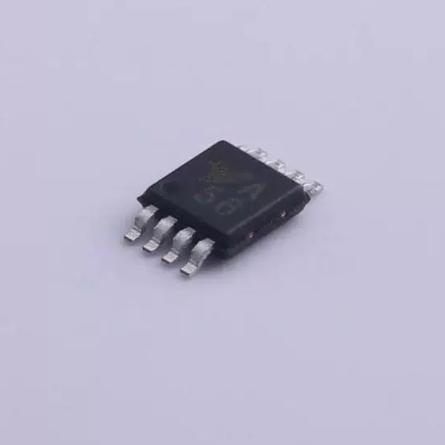
Dual-channel precision low-noise CMOS operational amplifier in MSOP-8 package, featuring 2.7nV/√Hz noise and rail-to-rail I/O.

Brand:

Package:

MSOP-8
In stock:
2394pcs

Cargo cycle: 3~7 Days
The minimum order is 1

Go to Inquiry
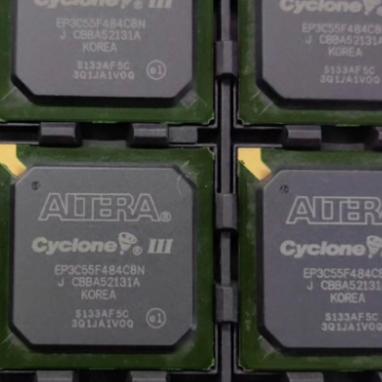
Cyclone III FPGA with 39,600 logic elements in 780-pin FBGA package, built on 65nm low-power process for cost-sensitive applications.

Brand:

Package:

FBGA-780 (29x29x1.75 mm)
In stock:
10283pcs

Cargo cycle: 3~7 Days
The minimum order is 1

Go to Inquiry
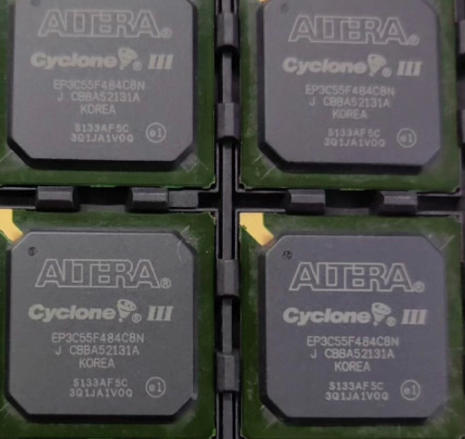
FPGA programmable logic integrated circuit for digital circuit design.

Brand:

Package:

BGA780
In stock:
2629pcs

Cargo cycle: 3~7 Days
The minimum order is 1

Go to Inquiry
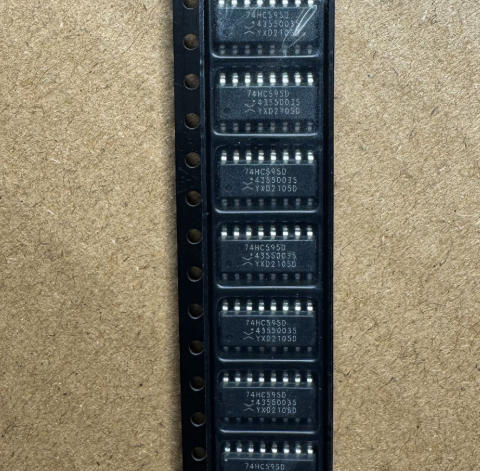
8-bit serial-in/serial or parallel-out shift register with output latches and 3-state outputs in SOIC-16 package.

Brand:

Package:

SOP16
In stock:
13078pcs

Cargo cycle: 3~7 Days
The minimum order is 1

Go to Inquiry
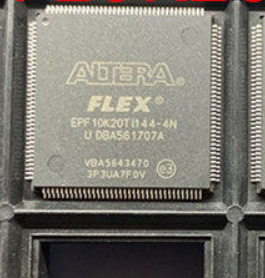
FLEX 10K FPGA with 20K gates and 1,152 logic elements in 144-pin TQFP package, featuring embedded array blocks. Obsolete.

Brand:

Package:

TQFP-144 (20 x 20 x 1.6 mm)
In stock:
2405pcs

Cargo cycle: 3~7 Days
The minimum order is 1

Go to Inquiry
High-performance baseband processing SoC for 5G base stations

Brand:

Package:

DFN-8
In stock:
500pcs

Cargo cycle: 3~7 Days
The minimum order is 1

Go to Inquiry
Quality Assurance

Quality is the core foundation of our long-term global cooperation. With over 20 years of experience in the electronic component industry, Materialparts has built a strict and standardized quality management system covering component sourcing, incoming inspection, full-batch testing, packaging and delivery. We are committed to delivering 100% genuine, high-reliability electronic components for industrial control, automotive electronics, consumer electronics and medical device industries, and fully safeguarding your production and R&D projects.

1. Authorized & Genuine Sourcing Promise

All of our electronic components are procured from official authorized distributors and original manufacturers. We strictly reject counterfeits, refurbished parts, disassembled components and gray-market goods. Every product is guaranteed to be brand-new original parts and fully consistent with the original technical parameters. For branded products such as NXP IC series, we maintain complete supply channel documents to realize full product traceability.

2. Strict Full-batch Quality Inspection

We implement 100% full-batch quality control for all goods before shipment. Our professional QC team conducts multi-dimensional tests including appearance inspection, electrical parameter testing, performance verification and packaging check. Each batch of components is attached with complete inspection reports and batch records. We stick to zero-tolerance standards for defective products to ensure every piece of component meets industrial application requirements.

3. Industry Standard Compliance

Our products comply with a variety of international industry quality standards to adapt to high-standard application scenarios:
  • Automotive Electronics: All automotive-grade components pass AEC-Q series certification, featuring excellent stability and durability to adapt to complex vehicle operating environments.
  • Medical Devices: High-reliability components meet medical industry safety and compliance regulations, ensuring stable operation for medical equipment.
  • Industrial Control & Consumer Electronics: Products conform to universal international electronic industry standards, suitable for long-term continuous operation of various equipment.

4. Professional Reliability Control

For static-sensitive, moisture-sensitive and precision components such as ICs, PCBs, sensors and connectors, we carry out reliability screening in advance. Combined with standardized ESD anti-static packaging and vacuum moisture-proof packaging, we avoid component damage caused by static electricity, dampness or collision during storage and transportation, and retain the original performance of products.

5. Traceability Management System

We establish a complete product traceability system. Each batch of goods corresponds to independent batch number, sourcing record, inspection record and delivery record. Customers can query the whole lifecycle information of components at any time. This system effectively solves quality risks and facilitates after-sales handling and production quality control for your company.

6. After-sales Quality Guarantee

If any product is confirmed to have non-conformity quality problems due to our reasons after receipt, we provide free return, exchange and supplementary delivery services. Our professional quality team will also conduct root cause analysis to optimize our quality control process. We respond to quality feedback within 24 hours to resolve your worries efficiently.

Contact Us

If you have inquiries about our quality standards, inspection procedures or product certification documents, please feel free to contact us:


Email: info@materialparts.com
Tel / WhatsApp: +86 13760382860
Address: Room 2919, Guoli Building, Huaqiang North, Futian District, Shenzhen, Guangdong, China


Shipping & Payment

Materialparts is a professional global supplier of electronic components with over 20 years of industry experience. We provide one-stop supply of passive components, integrated circuits, as well as parts for industrial control, automotive electronics, consumer electronics and medical devices. Below are the unified shipping and payment policies applicable to all orders, samples and bulk purchases worldwide.

1. Payment Terms

We offer a variety of secure and convenient payment methods to meet diverse business cooperation needs. Details are as follows:
  1. Accepted Payment Methods
  • T/T (Bank Wire Transfer): The primary settlement method for bulk orders and a widely used international payment channel.
  • PayPal: Ideal for small orders, sample orders and quick payments.
  1. Settlement Currency


    US Dollar (USD) is the default settlement currency. RMB is available for domestic customers.

  2. Bank Charges


    All transfer fees, intermediary bank charges and other remittance-related expenses shall be borne by the buyer.

  3. Payment Requirements
  • Sample and small orders: Shipment will be arranged upon full payment.
  • In-stock bulk orders: Goods will be delivered within 2 to 3 working days after full payment.

2. Shipping & Delivery

We partner with leading global logistics providers to ensure safe and fast delivery worldwide. Relevant details are listed below:
  1. Logistics Partners
  • International Express: DHL, FedEx, UPS, TNT
  • Economy Logistics: Air freight and sea freight for large-volume cargo
  • Domestic Delivery: SF Express, Yunda Express
  1. Order Processing Time
  • In-stock items: Orders confirmed and fully paid before 14:00 (GMT+8) will be shipped on the same day. All other orders will be dispatched within 1 to 2 working days.
  • Out-of-stock or sourced items: The delivery lead time will be confirmed separately according to brand and inventory status.
  1. Estimated Transit Time
  • International Express: 3 – 7 working days globally
  • Air Freight: 7 – 12 working days
  • Sea Freight: 25 – 40 working days for heavy and large bulk cargo
  1. Shipping Fee Rules
  • Shipping cost is calculated based on package weight, volume, destination and delivery method.
  • Both freight prepaid and freight collect are available. Please provide your courier account number in advance if you choose freight collect.
  • Free international express delivery is offered for large orders. Terms for long-term partners can be negotiated separately.
  1. Shipment Tracking
     

    Within 24 hours after dispatch, we will send the tracking number, commercial invoice, packing list and other documents to your email or communication account. You may check the shipment status online in real time.

3. General Order Rules & Notes

  1. MOQ & Sample Service


    We support flexible minimum order quantities for samples, small-batch and large-batch orders. All sample orders shall comply with the above shipping and payment policies.

  2. Packaging Standard


    All electronic components are packed with professional anti-static and shockproof materials. Original factory packaging is available for branded chips and integrated circuits.

4. Customs & Liability Statement

  1. Import Duties & Taxes


    All import duties, customs clearance fees and local taxes incurred for international shipments shall be borne by the buyer. We will provide complete customs documents to assist you with clearance procedures.

  2. Handling of Lost or Damaged Goods
  • In case of loss or severe damage during transit, please contact us within 48 hours after receiving the tracking information. We will assist you in filing a claim with the logistics provider.
  • We shall not be liable for any losses caused by incorrect delivery address, wrong contact information or the buyer’s refusal to complete customs clearance.

5. Local Pickup in Shenzhen

Local pickup service is available for customers in Shenzhen and surrounding areas:
  • Address: Room 2919, Guoli Building, Huaqiang North, Futian District, Shenzhen, Guangdong Province, China
  • Business Hours: 09:00 – 18:00, Monday to Friday. Closed on weekends and official public holidays.
  • Notice: Please make an appointment via email or communication tools one day in advance, and present your order information upon pickup.

Contact Information

Email: info@materialparts.com

Tel / WhatsApp: +86 13760382860

Service & Packaging

Materialparts is a professional electronic component supplier based in Shenzhen, China, with over 20 years of global trading experience. We integrate component procurement, quality inspection, technical support, customized packaging, and global delivery services to provide one-stop supply chain solutions. Our business covers industrial control, automotive electronics, consumer electronics, medical devices and other industries. We always adhere to genuine sources, stable supply and considerate after-sales service.

Core Services

1. One-stop Sourcing & BOM Support

We specialize in a full range of passive and active electronic components, including SMD resistors, power resistors, connectors, aviation connectors, LED beads, flexible circuit boards, printed circuit boards, and integrated circuits. Our professional team provides BOM list consolidation, component matching, and alternative model recommendation services. We support sample orders, small-batch trial production, and mass production orders with flexible MOQs to meet diverse procurement needs.

2. Genuine Product Guarantee & Full-process Quality Inspection

All products are sourced from official authorized channels and are 100% original genuine parts. Every batch of goods undergoes strict full-process quality inspection before delivery, with complete batch records and traceability documents provided. Our products comply with AEC-Q standards for automotive electronics and high-reliability specifications for medical devices. We eliminate counterfeits, refurbished parts and defective products from the source to secure your project production.

3. Fast Quotation & Order Processing

Our customer service team responds promptly to inquiries and quotation requests. All in-stock orders will be processed within one working day. We provide stocking reservation services for long-term cooperative customers, effectively solving problems such as component shortages and unstable supply chains.

4. Professional Technical Support

Our senior engineer team provides free technical consultation, model selection guidance and original manufacturer datasheets. We assist customers in solving problems related to product R&D, circuit design and component application, providing reliable technical support for project progress.

5. Sourcing for Special Components

Relying on our global supply chain network, we professionally source scarce components, obsolete parts and customized special components to efficiently solve your procurement difficulties.

6. Global Logistics & Document Services

We cooperate with mainstream international logistics providers including DHL, FedEx, UPS and TNT to achieve fast global delivery. We can provide complete export documents such as customs declaration files, commercial invoices and packing lists to ensure smooth customs clearance for international shipments. Local pickup is also available for customers in Shenzhen, China.

Professional Packaging Standards

Electronic components are sensitive to static electricity, collision, moisture and dust. We adopt industry-standard anti-static packaging solutions to fully ensure the integrity of goods during transportation and storage.

1. General Packaging Specifications

  • All components are packed separately to avoid damage caused by friction and collision;
  • Shockproof buffer materials are added for fragile products to ensure transportation safety;
  • Each package is clearly marked with part number, quantity, batch number and specifications for easy inventory counting and management.

2. Classified Professional Packaging

  • Anti-static Packaging: Static-sensitive components such as chips, circuit boards and sensors are packaged with anti-static bags, shielding boxes and conductive foam in strict accordance with international anti-static standards to prevent static damage.
  • Vacuum Moisture-proof Packaging: Moisture-sensitive components are vacuum-sealed with desiccants to isolate humid air, suitable for ocean transportation and long-term storage.
  • Original Factory Packaging: Integrated circuits of brands such as NXP are delivered with original reels, trays or tubes by default, retaining complete original packaging and adapting to automated SMT production lines.
  • Discrete Device Packaging: Discrete devices such as SMD resistors, power resistors and LEDs are quantitatively and classifiedly packaged with accurate quantity and clear marking.
  • Connector / Aviation Connector Packaging: Hard outer packaging is adopted to prevent pin bending and structural deformation.

3. Custom Packaging Services

We provide value-added services including personalized packaging, custom labeling and re-reeling according to customer requirements, fully matching your production and warehouse management standards.

Contact Information

For service consultation or packaging customization, please feel free to contact us:
Email: info@materialparts.com
Tel / WhatsApp: +86 13760382860
Address: Room 2919, Guoli Building, Huaqiang North, Futian District, Shenzhen, Guangdong, China
 

Online Inquiry Form

Support Excel, PDF, CSV format files for full BOM list quotation

Submit your component procurement and custom packaging needs via the form below. We will provide a detailed quotation and professional solution within 1–8 working hours.