pic18f45k45k80-i/p


وحدة معالجة مركزية PIC18 MCU 8 بت 64 ميجاهرتز، فلاش 32 كيلو بايت، ذاكرة وصول عشوائي 3.6 كيلو بايت، ذاكرة تخزين عشوائي 1 كيلو بايت، ذاكرة تخزين إلكترونية EEPROM، ECAN 2.0B، 2xEUSART، ADC 12 بت، وحدة تحكم باللمس CTMU، سكون 20nA، PDIP-40، 1.8-5.5 فولت، -40 ~ 85C

10000

المخزون الفعال

Image for reference only

جزء الشركة المصنعة : جزء الشركة المصنعة

pic18f45k45k80-i/p

الحزمة : الحزمة

PDIP-40 (53.34 × 14.73 × 5.08 مم، 2.54 مم، من خلال ثقب)

العلامة التجارية : العلامة التجارية
توصيات أخرى قد تكون مهتماً بها.
الوصف

The PIC18F45K80-I/P from Microchip Technology is an 8-bit PIC18 XLP (eXtreme Low Power) microcontroller with integrated ECAN module in a 40-pin PDIP (through-hole) package. Key specifications: PIC18 core at up to 64 MHz (16 MIPS); 32 KB Flash program memory (16K x 16 words); 3648 bytes SRAM; 1024 bytes data EEPROM; 1.8 V to 5.5 V operating voltage; integrated ECAN module conforming to CAN 2.0B active specification (1 channel with 8 transmit/receive buffers); 2 Enhanced USART modules with LIN support; 1 MSSP serial port configurable as SPI or I2C; 11-channel 12-bit ADC; 2 analog comparators; 4 Capture/Compare/PWM modules and 1 Enhanced CCP module; 5 timers (4 x 8/16-bit + 1 8-bit); Charge Time Measurement Unit (CTMU) for touch sensing and precision timing; Digital Signal Modulator (DSM); 35 I/O pins; brown-out detect (BOD); power-on reset (POR); watchdog timer (WDT); extreme low power: 20 nA sleep mode, 300 nA WDT operation in sleep; operating temperature -40 to +85 degrees C (I grade); PDIP-40 package (through-hole, 53.34 x 14.73 x 5.08 mm); 10,000 erase/write Flash endurance; 20-year Flash data retention; self-programming capability; ICSP and ICD via 2-wire interface; RoHS compliant. Active/In Production status.

The PIC18F45K80-I/P from Microchip Technology is an 8-bit PIC18 microcontroller with an integrated CAN 2.0B controller (ECAN module) and eXtreme Low Power (XLP) technology, designed for cost-sensitive automotive, industrial, and building automation applications that require CAN bus connectivity with minimal power consumption.

The PIC18F45K80 belongs to the PIC18F66K80 family, which includes devices with 28 to 64 pins and 16 KB to 64 KB Flash. The PIC18F45K80 is the 40-pin, 32 KB Flash member. The -I/P suffix indicates industrial temperature range (-40 to +85 degrees C) in PDIP (plastic dual in-line) through-hole package, making it ideal for prototyping, hobbyist projects, and low-volume production where through-hole assembly is preferred.

The ECAN module is the primary differentiator of the PIC18F45K80. ECAN (Enhanced CAN) is Microchip’s implementation of the CAN 2.0B active specification, supporting both standard (11-bit) and extended (29-bit) message identifiers. The module includes 8 transmit/receive buffers (configurable as TX or RX), 16 acceptance filters with 16 masks for message filtering, and automatic bit timing calculation from the CAN bus baud rate. The ECAN module handles all CAN protocol layer functions (bit stuffing, CRC, error management, bit timing) in hardware, offloading the CPU for application tasks.

The 20 nA sleep current is remarkably low and is a hallmark of Microchip’s XLP technology. In applications where the MCU spends most of its time sleeping (e.g., waiting for a CAN message or a timer wake-up), the battery drain is dominated by the sleep current. At 20 nA, a 1000 mAh coin cell battery would last over 5700 years in sleep (theoretical), making the sleep current essentially zero for practical purposes. Even with the WDT running at 300 nA, the battery life is still measured in centuries.

The 1.8 V to 5.5 V operating voltage range is wider than typical PIC18 devices (which usually start at 2.0 V). The 1.8 V minimum enables operation from a single alkaline cell (1.5 V nominal, down to 0.9 V end-of-life with a boost converter) or from a single Li-Ion cell without regulation. The 5.5 V maximum allows direct connection to 5 V automotive and industrial systems.

The CTMU (Charge Time Measurement Unit) is a versatile peripheral that can be used for capacitive touch sensing (buttons, sliders, wheels), precision time measurement (resolution down to 1 ns), and capacitance-to-digital conversion. For touch sensing, the CTMU charges a sensor pad through a constant current source and measures the time to reach a threshold voltage. The measured time is proportional to the sensor capacitance, which changes when a finger is present. The CTMU enables touch user interfaces without external components.

The 11-channel 12-bit ADC provides higher resolution than the typical 10-bit ADC found on most PIC18 devices. The 12-bit resolution gives 4096 counts over the reference voltage range, providing 1.22 mV resolution at 5 V reference, compared to 4.88 mV for a 10-bit ADC. This improved resolution is valuable for sensor applications requiring higher precision.

The dual EUSART modules support LIN (Local Interconnect Network) bus communication in addition to standard UART. LIN is a single-wire, low-cost serial bus used in automotive sub-systems (door modules, seat controls, lighting). Each EUSART supports auto-baud detection, 9-bit addressing, and wake-on-start-bit for multi-node serial networks.

The PDIP-40 package is significant for several reasons: it is through-hole, making it easy to prototype on breadboards and through-hole PCBs; it is the same pinout as the classic PIC16F877A and PIC18F4520, enabling easy migration from these legacy devices; and it is one of the few CAN-equipped MCUs available in a through-hole package, making it accessible to hobbyists and educators who cannot solder surface-mount components.

Development is supported by Microchip’s MPLAB X IDE, MPLAB Code Configurator (MCC), and PICKit/ICD programmers. The PIC18F45K80 is also supported by the Microchip XC8 C compiler, which includes optimized libraries for ECAN, ADC, and communication peripherals.

The PIC18F45K80-I/P operates as an 8-bit Harvard architecture microcontroller with a 16-bit instruction word, integrating a CAN 2.0B protocol controller and advanced analog peripherals alongside the CPU core.

PIC18 Core: The PIC18 core uses a modified Harvard architecture with separate program and data memory buses. The program memory is organized as 16-bit words (not bytes), which allows most instructions to be encoded in a single word. The core executes most instructions in a single cycle (4 clock periods) at up to 64 MHz clock, giving 16 MIPS throughput. The instruction set includes 8×8 hardware multiply (single cycle), table read/write for Flash and EEPROM access, and conditional branch instructions. Unlike ARM Cortex-M cores, the PIC18 has no pipeline; each instruction is fetched and executed sequentially.

Memory Architecture: The 32 KB Flash is organized as 16K x 16-bit words. The data SRAM (3648 bytes) is accessed through the data bus using banked addressing (12 banks of 256 bytes each, plus Access RAM). The 1024-byte EEPROM is accessed through special registers (EEADR, EEDATA, EECON1, EECON2) and supports up to 1 million erase/write cycles. The Flash supports 10,000 erase/write cycles and 20-year data retention. Self-programming allows the application to write to its own Flash (for bootloaders and data logging) through the same table read/write mechanism.

ECAN Module: The Enhanced CAN module implements the CAN 2.0B active protocol in hardware. The module consists of a protocol engine, bit timing logic, and a message buffer system. The protocol engine handles frame formatting (start-of-frame, arbitration field, control field, data field, CRC field, ACK field, end-of-frame), bit stuffing/de-stuffing, error detection and signaling (bit error, stuff error, CRC error, form error, ACK error), error management (transmit/receive error counters, error passive/bus-off states), and bit timing (synchronization, propagation, phase segments).

The message buffer system uses 8 buffers that can be individually configured as transmit or receive buffers. Each buffer has dedicated registers for the message identifier (SID/EID), data length code (DLC), data bytes (up to 8), and status flags. The 16 acceptance filters and 16 masks allow the ECAN to accept or reject incoming messages based on the identifier field, reducing CPU interrupt load by filtering out irrelevant messages at the hardware level.

The ECAN supports bit rates from 10 kbps to 1 Mbps, determined by the CAN bus length and the oscillator frequency. The bit timing is configured through the BRGCONx registers, which set the baud rate prescaler, synchronization jump width, propagation segment, and phase segments 1 and 2. The module requires an external CAN transceiver (such as MCP2551 or SN65HVD230) to convert the MCU logic-level signals to the differential CAN bus levels.

CTMU: The Charge Time Measurement Unit consists of a precision constant current source, a discharge switch, and measurement circuitry. For capacitive touch sensing, the CTMU charges the sensor pad (connected to a GPIO pin configured as a capacitive input) with a constant current for a fixed time period, then the ADC measures the resulting voltage. When a finger is present, the additional capacitance causes the voltage to be lower (since V = I x T / C, higher C means lower V for constant I and T). The CTMU can also measure time intervals by charging a known capacitor with a constant current and measuring the voltage change, which gives the elapsed time with nanosecond-level resolution.

12-bit ADC: The ADC uses a successive approximation register (SAR) architecture with a capacitive charge redistribution DAC. The 12-bit resolution provides 4096 quantization levels. The ADC can be triggered by software, timer overflow, or external event. It supports automatic acquisition time calculation and can perform sequential scanning of multiple channels. The result is stored in 12-bit right-justified or left-justified format in the ADRESH:ADRESL register pair.

Power Management: The XLP technology achieves the ultra-low sleep current through several techniques: the on-chip voltage regulator is disabled in sleep mode (the core runs at 1.8 V internally, and the regulator is bypassed during sleep); the oscillator and all peripherals are stopped; only the WDT (if enabled) and the BOR (if enabled) remain active. The 20 nA sleep current assumes WDT and BOR are both disabled. With WDT enabled, the current increases to 300 nA. The MCU wakes from sleep on any enabled interrupt (external interrupt, CAN activity, EUSART start bit, timer overflow, etc.).

ICSP/ICD: The In-Circuit Serial Programming and In-Circuit Debug interface uses 2 pins (PGC, PGD) plus VDD, VSS, and MCLR. This allows Flash programming and real-time debugging (breakpoints, single-step, register view) without removing the device from the target board. The ICD interface is compatible with Microchip’s PICKit 3/4, ICD 3/4, and MPLAB Snap programmers/debuggers.


مجموعة الدبوس الاسم النوع الوصف
الطاقة VDD, VSS الطاقة VDD: positive supply 1.8-5.5 V (2 pins); VSS: ground (2 pins); decouple each VDD with 100 nF ceramic capacitor close to the pin; add a 10 uF bulk capacitor near the MCU; for analog accuracy, use a separate filtered VDD path for AVDD and AVSS
إعادة تعيين MCLR المدخلات Master Clear (reset) input; active-low; internal pull-up; asserting LOW for at least 2 us generates device reset; also used as ICSP programming voltage input (VPP, approximately 9 V during programming); connect through a 10 kOhm pull-up resistor to VDD; add a 100 nF capacitor to VSS for noise filtering; do not connect directly to VDD without pull-up resistor
Debug/Program PGC, PGD الإدخال/الإخراج الرقمي ICSP programming and ICD debug clock (PGC) and data (PGD); shared with general-purpose I/O pins (typically RB6, RB7); during programming, PGC and PGD must be isolated from the application circuit (use series resistors or jumpers); connect to PICKit/ICD programmer
أو إس سي OSC1, OSC2 الإدخال/الإخراج التناظري Primary oscillator pins; OSC1: external clock input or crystal connection; OSC2: crystal feedback or FOSC/4 clock output; supports LP, XT, HS, EC oscillator modes; for CAN applications, a crystal oscillator is required for accurate bit timing (internal RC oscillator tolerance of 1 percent is too loose for CAN); typical crystal frequency: 16 MHz or 20 MHz with PLL to achieve 64 MHz CPU clock
كان CANRX, CANTX رقمي ECAN receive data input (CANRX) and transmit data output (CANTX); connect to external CAN transceiver (MCP2551, SN65HVD230, TJA1050); CANTX drives the TXD input of the transceiver; CANRX receives the RXD output of the transceiver; do not connect directly to CAN bus; shared with other digital peripheral functions (alternate pin selection may be available)
ADC AN0-AN10 Analog Input 11 analog input channels for 12-bit ADC; shared with digital I/O pins; configure ANSELH register to select analog vs digital mode; internal acquisition and conversion; reference voltage can be VDD or external VREF pin; differential measurement not supported; channels can be sequentially scanned
GPIO RA0-RA7, RB0-RB7, RC0-RC7, RD0-RD7, RE0-RE2 الإدخال/الإخراج 35 general-purpose I/O pins across 5 ports (A-E); each pin has individually configurable direction (TRIS register), input latch (PORT register), and output latch (LAT register); most pins have multiple alternate functions (ECAN, EUSART, MSSP, CCP, PWM, ADC, CTMU, comparators, timers); 5 V tolerant inputs when VDD = 3.3 V; RB0/INT supports external interrupt
Analog Ref VREF+, VREF- Analog Input External ADC reference voltage inputs; VREF+ sets the positive reference (2.4 V to VDD); VREF- sets the negative reference (VSS to VREF+ – 0.7 V); if not used, internal VDD/VSS references are used; use external references for higher accuracy or different measurement ranges; shared with digital I/O pins
التطبيق الوصف
CAN Bus Sensor Node Read analog sensors via 12-bit ADC and transmit data over CAN bus; ECAN module handles CAN protocol autonomously; 20 nA sleep current allows battery-powered operation with periodic wake-up; CTMU provides capacitive touch buttons for local configuration; 32 KB Flash stores application code and CAN message handling; ideal for distributed sensor networks in industrial and building automation
Automotive Body Controller Control door locks, windows, mirrors, and lighting via CAN bus; ECAN module communicates with vehicle body network; dual EUSART supports LIN bus for local sub-networks (door modules, seat controls); 5 V operation compatible with automotive electrical systems; CCP/PWM modules control LED dimming and motor speed; CTMU enables touch-sensitive door handle or dashboard controls
Industrial CAN Gateway Bridge between CAN bus and serial (RS-232/RS-485) networks; ECAN receives CAN messages and EUSART forwards them to serial port (and vice versa); 3648 bytes SRAM provides buffer space for message queuing; 1 KB EEPROM stores configuration and calibration data persistently; 12-bit ADC monitors supply voltage and temperature for diagnostics; watchdog timer ensures automatic recovery from software faults
Precision Sensor Interface Use CTMU for high-resolution capacitance measurement (humidity, pressure, liquid level sensors); 12-bit ADC provides 1.22 mV resolution at 5 V reference; CTMU time measurement mode enables nanosecond-resolution timing for time-of-flight sensors; EEPROM stores sensor calibration coefficients; CAN or UART transmits measurement data to host system
Educational CAN Development Board PDIP-40 package is ideal for breadboard-based CAN development and teaching; students can build CAN networks on breadboards without SMD soldering; MPLAB X IDE and MCC provide graphical peripheral configuration; PICKit programmer connects directly; CAN transceiver (MCP2551 in DIP-8) completes the hardware; inexpensive platform for learning CAN protocol and embedded networking
الطراز الشركة المصنعة التوافق الفرق الرئيسي
pic18f45k45k80-i/PT الرقاقة الدقيقة Same Die, SMD Package Same MCU in TQFP-44 surface-mount package (10×10 mm); same electrical specs and peripherals; 4 additional pins (44 vs 40) for additional I/O; pin-compatible with other PIC18F45K80 package options; use for production where SMD is preferred; TQFP allows higher pin-count variants
PIC18F46K80-I/P الرقاقة الدقيقة Same Family, More Memory 64 KB Flash (2x), 3648 bytes SRAM (same), PDIP-40; same ECAN and peripherals; more program memory for larger applications (TCP/IP stack, complex CAN protocol); pin-compatible upgrade; use when 32 KB Flash is insufficient
PIC18F26K80-I/SO الرقاقة الدقيقة Same Family, Smaller Package 28-pin SOIC package (smaller); 32 KB Flash; fewer I/O (25 vs 35); fewer ADC channels (9 vs 11); same ECAN module; use when fewer I/O pins are needed and a smaller footprint is desired
STM32F042C6T6 STMicroelectronics Competitive ARM Alternative Cortex-M0 at 48 MHz; 32 KB Flash, 6 KB SRAM; CAN 2.0B; TSSOP-20 (smaller); 32-bit architecture (more powerful); not pin-compatible; lower cost; use as modern ARM-based alternative with CAN; requires different development tools (STM32CubeIDE)
ATmega32M1-AU Microchip (AVR) Competitive AVR Alternative AVR core at 16 MHz (slower); 32 KB Flash, 2 KB SRAM, 1 KB EEPROM; CAN 2.0A/B; TQFP-32; 10-bit ADC (lower resolution); LIN controller; not pin-compatible; use for AVR-ecosystem developers needing CAN; lower performance but simpler architecture
قطع الغيار الموصى بها
8-bit AVR MCU, 20MHz, 32KB Flash, 2KB SRAM, TQFP-32, NRND

العلامة التجارية:

الحزمة:

TQFP-32 (7×7×1.05 mm)
متوفر في المخزون:
13010pcs

دورة الشحن 3 ~ 7 أيام
الحد الأدنى للطلب هو 1

E1/T1 Line Interface Unit, 8.192Mbps, short/long haul, integrated CDR, 80-MQFP, 3.3V

العلامة التجارية:

الحزمة:

80-MQFP (14x14mm)
متوفر في المخزون:
14099pcs

دورة الشحن 3 ~ 7 أيام
الحد الأدنى للطلب هو 1

ARM7TDMI MCU, 55MHz, 256KB Flash, 64KB SRAM, Ethernet MAC, USB, CAN, LQFP-100

العلامة التجارية:

الحزمة:

LQFP-100
متوفر في المخزون:
3752pcs

دورة الشحن 3 ~ 7 أيام
الحد الأدنى للطلب هو 1

3A adjustable LDO, 1.24-15V output, 450mV dropout, TO-263-5, fast transient response

العلامة التجارية:

الحزمة:

TO-263-5 (10.67 x 9.17 x 4.6 mm)
متوفر في المخزون:
7577pcs

دورة الشحن 3 ~ 7 أيام
الحد الأدنى للطلب هو 1

12-bit single-channel voltage DAC, SPI, rail-to-rail output, 2.7-5.5V, SOIC-8, AEC-Q100

العلامة التجارية:

الحزمة:

SOIC-8 (4.9 × 3.9 مم)
متوفر في المخزون:
2849pcs

دورة الشحن 3 ~ 7 أيام
الحد الأدنى للطلب هو 1

8-bit AVR MCU, 32KB Flash, 2KB SRAM, 23 I/O, 8ch 10-bit ADC, TQFP-32, T&R

العلامة التجارية:

الحزمة:

TQFP-32 (7.0 x 7.0 x 1.05mm)
متوفر في المخزون:
6946pcs

دورة الشحن 3 ~ 7 أيام
الحد الأدنى للطلب هو 1

ضمان الجودة

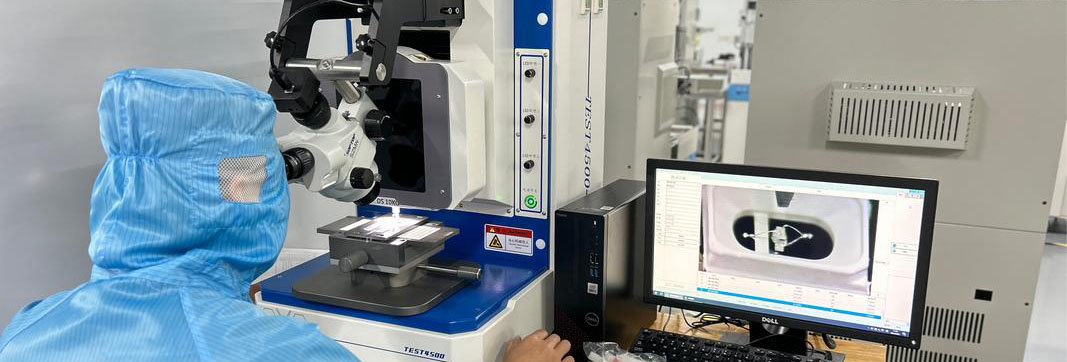
تخضع جميع المكونات الإلكترونية التي نحصل عليها من سلاسل التوريد الشريكة لنا لعمليات فحص صارمة للواردات، ومن خلال الاختبارات الدقيقة، نضمن أن كل ما يتم تسليمه للعملاء هو قطع أصلية أصلية وتفي بمتطلبات الجودة، بالإضافة إلى ذلك، نحتفظ بسجلات فحص كاملة لجعل عملية سلسلة التوريد بأكملها واضحة ويمكن تتبعها.

التصديق
لقد حصلنا على عدد من الشهادات الاحترافية وقمنا ببناء مختبر الاختبار الاحترافي الخاص بنا، وهذا يضمن أن كل منتج نقدمه لعملائنا يلبي أعلى متطلبات الجودة، ونجري الاختبارات وفقًا لإجراءات صارمة لضمان جودة المنتج المستقرة والمعايير الدقيقة، ولضمان جودة المنتج المستقرة والمعايير الدقيقة، ولضمان قطع أصلية أصلية، نتعاون أيضًا مع مؤسسات اختبار موثوقة من طرف ثالث لفحص الجودة الصارم، ونولي دائمًا أهمية كبيرة للجودة ونلتزم تمامًا بمعايير الصناعة واللوائح ذات الصلة ومتطلبات ISO 9001: 2015.

الشحن والدفع

تخضع جميع المكونات الإلكترونية التي نحصل عليها من سلاسل التوريد الشريكة لنا لعمليات فحص صارمة للواردات، ومن خلال الاختبارات الدقيقة، نضمن أن كل ما يتم تسليمه للعملاء هو قطع أصلية أصلية وتفي بمتطلبات الجودة، بالإضافة إلى ذلك، نحتفظ بسجلات فحص كاملة لجعل عملية سلسلة التوريد بأكملها واضحة ويمكن تتبعها.

التصديق
لقد حصلنا على عدد من الشهادات الاحترافية وقمنا ببناء مختبر الاختبار الاحترافي الخاص بنا، وهذا يضمن أن كل منتج نقدمه لعملائنا يلبي أعلى متطلبات الجودة، ونجري الاختبارات وفقًا لإجراءات صارمة لضمان جودة المنتج المستقرة والمعايير الدقيقة، ولضمان جودة المنتج المستقرة والمعايير الدقيقة، ولضمان قطع أصلية أصلية، نتعاون أيضًا مع مؤسسات اختبار موثوقة من طرف ثالث لفحص الجودة الصارم، ونولي دائمًا أهمية كبيرة للجودة ونلتزم تمامًا بمعايير الصناعة واللوائح ذات الصلة ومتطلبات ISO 9001: 2015.

الخدمة والتغليف

تخضع جميع المكونات الإلكترونية التي نحصل عليها من سلاسل التوريد الشريكة لنا لعمليات فحص صارمة للواردات، ومن خلال الاختبارات الدقيقة، نضمن أن كل ما يتم تسليمه للعملاء هو قطع أصلية أصلية وتفي بمتطلبات الجودة، بالإضافة إلى ذلك، نحتفظ بسجلات فحص كاملة لجعل عملية سلسلة التوريد بأكملها واضحة ويمكن تتبعها.

التصديق
لقد حصلنا على عدد من الشهادات الاحترافية وقمنا ببناء مختبر الاختبار الاحترافي الخاص بنا، وهذا يضمن أن كل منتج نقدمه لعملائنا يلبي أعلى متطلبات الجودة، ونجري الاختبارات وفقًا لإجراءات صارمة لضمان جودة المنتج المستقرة والمعايير الدقيقة، ولضمان جودة المنتج المستقرة والمعايير الدقيقة، ولضمان قطع أصلية أصلية، نتعاون أيضًا مع مؤسسات اختبار موثوقة من طرف ثالث لفحص الجودة الصارم، ونولي دائمًا أهمية كبيرة للجودة ونلتزم تمامًا بمعايير الصناعة واللوائح ذات الصلة ومتطلبات ISO 9001: 2015.