
July 1 Price Tsunami: 20+ Power Semiconductor Vendors Raise Prices as AI Demand Reshapes Component Markets
July 1, 2026 marks a watershed moment for the global electronic components industry. Nearly 20 power semiconductor vendors — spanning international giants and domestic Chinese suppliers — are implementing synchronized price increases on the same day, in what industry observers are calling the most coordinated pricing action in semiconductor history. The increases range from 5% to 30%, covering power devices, analog ICs, MCUs, NOR Flash, connectors, and passive components.
This is not a repeat of the 2020–2022 chip shortage, which was driven by pandemic-induced supply disruptions and consumer electronics demand. The current wave is structurally different: AI infrastructure investment has permanently reallocated manufacturing capacity, created new demand categories that did not exist three years ago, and shifted pricing power decisively toward suppliers.
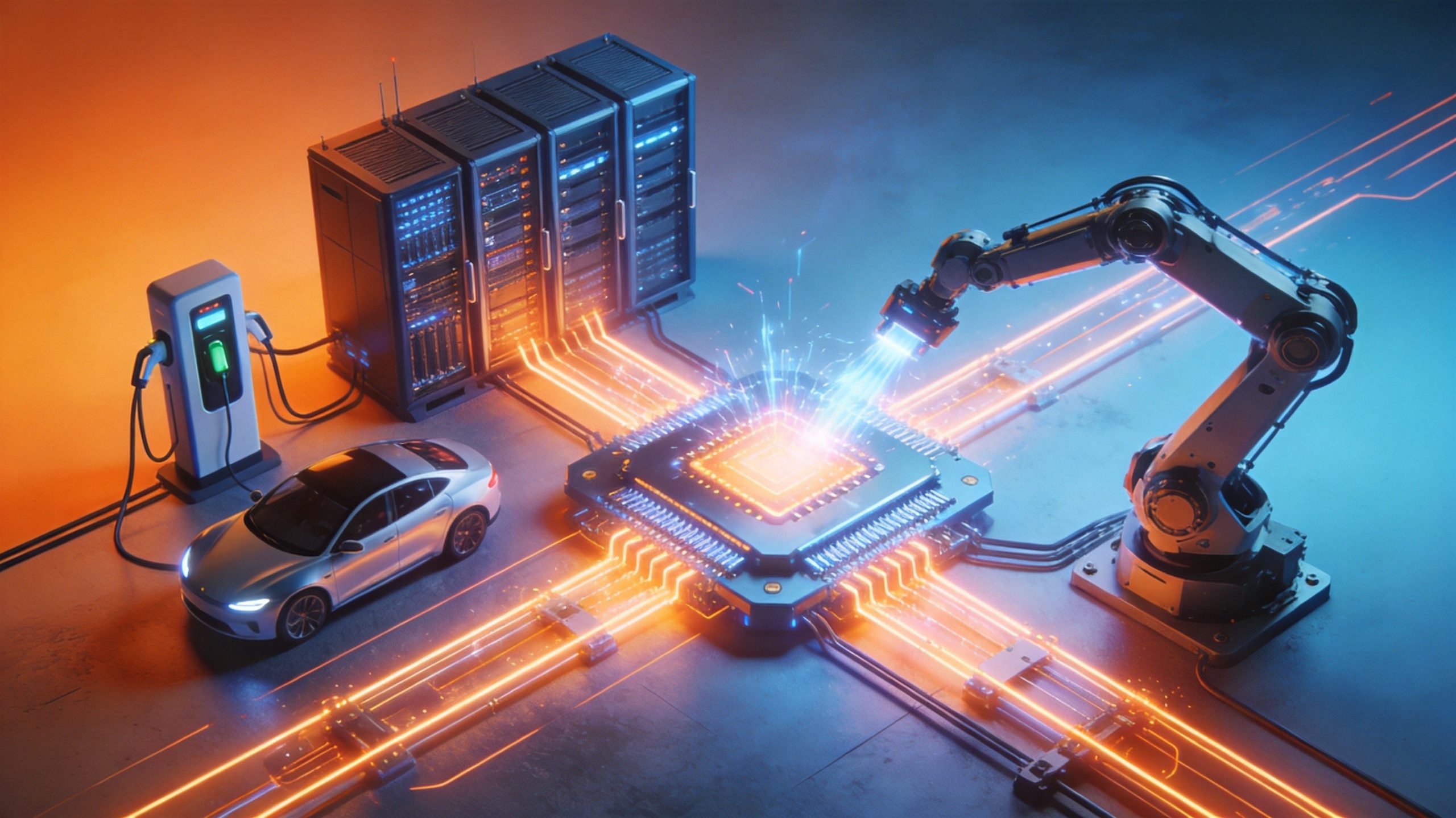
The July 1 Coordinated Adjustment: Who Is Raising Prices
The breadth of the July 1 price adjustments is unprecedented. Key increases include:
- Infineon Technologies: Second price increase in three months, effective July 1, covering selected semiconductor products. The company cited escalating supply chain costs and demand exceeding forecasts made only months ago. AI data center power solutions revenue is expected to reach €1.5 billion this fiscal year, potentially rising to €2.5 billion next year.
- Silan Microelectronics (士兰微): Full product line price increase of 15%+, effective July 1, covering all product categories including MOSFETs, IGBTs, and diodes.
- MediaTek: Issued formal price adjustment notices to customers — a rare move for the company, which has historically avoided written price increase communications.
- GigaDevice (聚辰股份): 25% price increase across all NOR Flash products, effective July 6, covering both new orders and unfulfilled portions of existing orders.
- TE Connectivity: 5–12% increase across all product lines, effective July 6, with high-speed, AI, and liquid cooling categories seeing 10–12% increases covering telecom, high-voltage, automotive, and industrial segments.
- Hua Hong Semiconductor & Silan: Additional domestic suppliers including 上海贝岭 (10–30%), 华大电子, 极海半导体, and 矽力杰 (Silicon Mitus) all implementing July 1 adjustments.
- Texas Instruments: Preparing another round of price increases for PMICs and MOSFET products beginning July, following its April 1 increase of 15–85%.
- STMicroelectronics: Price increase effective June 28 on power conversion, MEMS sensors, and STM32 series, with some categories seeing double-digit hikes.
The synchronization is notable. While each vendor cites its own cost pressures — raw materials, energy, logistics — the coordination reflects a market in which demand so far exceeds supply that vendors no longer fear competitive loss from price increases. When every supplier is raising prices simultaneously, the risk of customer defection approaches zero.
The AI Power Demand Engine
The primary demand driver is no longer consumer electronics or even automotive — it is AI infrastructure. The power semiconductor requirements of AI data centers are qualitatively different from traditional computing facilities:
- Power density transformation: A single NVIDIA Rubin rack-scale system consumes dramatically more power than previous-generation clusters, requiring advanced HVDC power architectures, high-efficiency power conversion stages, and sophisticated thermal management.
- NVIDIA Rubin enters volume production: Industry analysts project Rubin rack-level throughput at 10× the previous generation, with volume shipments in H2 2026. NVIDIA shares rose 2.63% on the announcement, with single-day trading volume exceeding $32 billion.
- SiC/GaN inflection: Third-generation wide-bandgap semiconductors are entering a “100 billion yuan market window” as AI data centers demand higher efficiency power conversion. South Korea separately announced a 500 billion KRW dedicated investment in SiC/GaN power semiconductors, designating power devices as the nation’s second strategic semiconductor category after memory.
- EV synergy: Automotive electrification continues to drive parallel demand for the same power device categories — IGBTs, SiC MOSFETs, and GaN FETs — creating a double-sided demand pressure that shows no sign of easing.

SEMI Upgrades Equipment Forecast: $1.51 Trillion in 2026
The scale of capacity expansion underway is staggering. SEMI has raised its 2026 global semiconductor equipment sales forecast to $1.51 trillion — a 90% year-over-year increase. The growth is entirely driven by three categories: advanced process equipment for AI chips, HBM packaging equipment, and third-generation semiconductor (SiC/GaN) manufacturing tools.
TSMC maintains its $56 billion capital expenditure plan for 2026, with 60% allocated to 3nm and 5nm compute chip production lines. SK Hynix is procuring approximately 200 inspection and test devices — including HBM4 testers — for its Cheongju P&T7 advanced packaging facility, with a total order value reaching up to 400 billion KRW.
But equipment investment today translates to capacity in 2028–2029 at the earliest. The lead time for advanced fab construction remains 3–5 years, and equipment installation adds another 12–18 months. The supply-demand gap that is driving today’s price increases will not be resolved by current capital expenditure — it will be sustained by it.
The Upstream Cost Cascade
Beneath the demand-driven narrative lies a parallel cost-driven force. Upstream material costs have escalated systemically:
- Copper: Domestic copper prices rose 34.34% in 2025 and continued surging in early 2026, reaching 101,795 yuan/ton by February — a critical input for wafer fabrication, packaging substrates, and interconnects.
- Silver and tin: Solder materials and conductive adhesives have seen similar inflation, driven by both commodity market dynamics and supply chain restructuring.
- Wafer foundry pass-through: SMIC and Hua Hong raised mature-node wafer prices by approximately 10%, while TSMC and UMC increased 8-inch foundry prices by 10–15%. These increases flow directly into the cost structure of every fabless semiconductor company.
- Energy and logistics: Every vendor without exception cited rising energy, transportation, and labor costs as contributing factors — reflecting a broad inflationary environment that compounds the AI demand effect.
The cost cascade creates a ratchet effect: once prices rise to accommodate higher input costs, they do not retreat when commodity prices stabilize, because the demand-side pressure prevents any competitive incentive to discount.
Consumer Impact: The Price Floor Rises
The component price surge is now reaching consumer markets with unusual speed and breadth:
- Apple implemented a rare global price increase across MacBook, iPad, and hardware products, with an average increase of approximately 20%.
- Chinese smartphone brands including OPPO, OnePlus, vivo, iQOO, Xiaomi, and Honor have confirmed price increase plans. New models launched after March — carrying the full cost structure of 2026 components — will see minimum increases of 1,000 yuan, with flagship devices rising 2,000–3,000 yuan.
- PC manufacturers Dell, HP, and Lenovo are all planning increases. Dell’s high-end commercial notebooks have already risen 20–25%; Lenovo models are up over 1,000 yuan; Apple’s new MacBook Pro is up $400.
- 汽车 BYD raised the price of its “Tian Shen Yan B” assisted driving laser package from 9,900 to 12,000 yuan, explicitly citing “the substantial increase in global storage hardware costs.”
The consumer impact confirms that this is not a B2B phenomenon contained within supply chains — it is a broad-based repricing of the electronics economy, from component to end product.
Strategic Outlook
The July 1 coordinated price increase is not a peak — it is a plateau. The structural forces driving it (AI infrastructure demand, upstream cost inflation, capacity constraints at mature nodes) are durable and self-reinforcing. Several dynamics will sustain pricing pressure through 2027:
- AI infrastructure buildout is accelerating, not decelerating. NVIDIA’s $1 trillion backlog, TSMC’s $56 billion capex, and Korea’s $518 billion fab investment all point to demand that is growing faster than supply can expand.
- Power semiconductor demand is the newest demand frontier. AI data center power requirements are creating an entirely new market segment that competes for the same manufacturing capacity as automotive and industrial applications.
- Third-generation semiconductors (SiC/GaN) are transitioning from niche to mainstream, but capacity expansion is slow — SiC substrate growth takes months, and GaN epitaxy yields remain inconsistent at scale.
- Consumer price acceptance — the fact that Apple, Xiaomi, and BYD can pass through component cost increases to end users without catastrophic demand destruction — validates supplier pricing power.
For procurement teams, the operating assumption should be: prices will not return to 2025 levels within this decade. Strategic responses include long-term supply agreements with pre-negotiated escalation caps, design-for-supply practices that qualify multiple component sources, and inventory buffering for critical power device families where lead times exceed 20 weeks.
Key Takeaways
- Nearly 20 power semiconductor vendors implemented synchronized price increases on July 1, ranging from 5% to 30% — the most coordinated pricing action in semiconductor history
- AI data center power demand has created a new demand category that competes with automotive and industrial for the same manufacturing capacity
- NVIDIA Rubin entered volume production with 10× throughput improvement, driving further demand for power conversion and management components
- SEMI raised its 2026 equipment sales forecast to $1.51 trillion (+90% YoY), entirely driven by AI process, HBM packaging, and SiC/GaN equipment
- Consumer price increases from Apple, Xiaomi, Dell, and BYD confirm that component cost inflation is passing through to end products at unprecedented speed
- SiC/GaN wide-bandgap semiconductors are entering a “100 billion yuan market window” as AI and EV demand converges on the same power device categories
 English
  简体中文
简体中文  Español
  العربية