
Bluetooth technology is constantly evolving, building the underlying architecture to support the Internet of Everything (IoT). Its innovation trajectory has extended to multi-dimensional scenario empowerment. Especially in recent years, the emergence of breakthrough technologies such as Mesh 2.0, LE Audio, Auracast (Broadcast Audio), ESL (Electronic Shelf Labels), and Channel Sounding has driven the continuous expansion of the Bluetooth ecosystem in the field of spatial intelligence applications.
These new technologies have reshaped the pattern of wireless connectivity, further expanding Bluetooth’s application potential in IoT, audio transmission, precise positioning, and other fields. They are driving the iteration of the Bluetooth ecosystem in three directions: penetration from consumer device interconnection to industrial spatial intelligence, evolution from a single functional module to a multi-technology integration platform, and ultimately the full integration of the digital world and the physical environment in terms of positioning, transmission, interaction, and other dimensions. This article focuses on interpreting the core functions and typical applications of two emerging technologies: Bluetooth Channel Sounding and Bluetooth + Edge AI.
I. Bluetooth Channel Sounding: Achieving a Leap in 3D Positioning and Building a Solid Foundation for Spatial Interaction
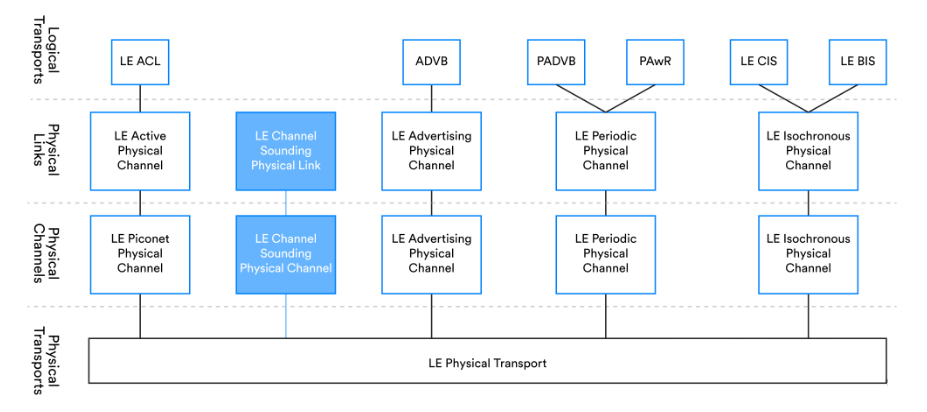
Bluetooth Channel Sounding is a key innovation launched by the Bluetooth Special Interest Group (Bluetooth SIG) in its core specification 6.0 released last year. Supported by three major technologies—algorithmic innovation (PBR + RTT), hardware optimization (multi-channel/antenna), and security enhancement (encryption + randomization)—it has achieved multiple innovative breakthroughs:
- High-precision positioning: Adopting Phase-Based Ranging (PBR) and Round-Trip Time (RTT) technologies, it can achieve centimeter-level positioning accuracy of ±50 cm within a range of 100 meters, which is a significant improvement over the meter-level error of the traditional RSSI path loss method. It also maintains high-precision stability at distances from tens of meters to 100 meters;
- Strong anti-interference capability: It supports signal multi-path diversity technology for multiple channels and multi-antenna paths in the 2.4GHz band. Combined with built-in clock offset compensation and dynamic channel selection mechanisms, it effectively resists environmental interference such as obstacle reflection and ensures measurement consistency in complex electromagnetic environments;
- High security: It integrates a triple protection system, including a Deterministic Random Bit Generator (DRBG) to randomize key parameters, full-link encrypted transmission to prevent eavesdropping and tampering, and PBR/RTT two-way verification to prevent relay attacks, building a solid line of defense for data security.
This technology has achieved a leap from Bluetooth 2D ranging to 3D positioning, building a precise spatial interaction foundation for IoT devices and widely empowering consumer, industrial, and cutting-edge integrated scenarios:
- Consumer field: Intelligent keyless entry systems can automatically unlock car doors through ranging within 1 meter; pet anti-loss collars trigger alarms when they exceed a safe distance of 0.5 meters, protecting items and pets;
- Industrial scenarios: Electric tools on construction sites can be equipped with geofencing functions to prevent unauthorized use; retail navigation systems guide customers directly to designated shelves to improve shopping experience; smart warehouses optimize forklift paths through 3D maps to increase warehousing efficiency; medical equipment management platforms track the location of electrocardiographs and other devices in real time to ensure the smooth progress of medical processes;
- Cutting-edge integrated applications: Security access systems require both a 0.3-meter distance threshold and angle matching to unlock, enhancing security levels; airport navigation systems provide centimeter-level precision guidance to boarding gates, optimizing travel experience and promoting the evolution of technology from a single function to a comprehensive solution.
II. Bluetooth + Edge AI: Reshaping the Intelligent Paradigm of IoT and Enabling Efficient End-Side Collaboration
Currently, Bluetooth technology is deeply integrating with Edge AI, reshaping the intelligent paradigm of IoT devices. When Bluetooth Low Energy (BLE) technology is combined with lightweight Edge AI models (such as MobileNet vision model and Tiny YOLO target detection framework), it can break through the performance boundaries of the traditional “cloud AI + Bluetooth transmission” architecture on miniaturized hardware platforms, achieving three core breakthroughs:
- Improved real-time performance: AI models deployed on the device side can process sensor data transmitted via Bluetooth in real time. For example, sensor nodes based on Bluetooth Mesh networks in industrial IoT can realize localized prediction of equipment fault characteristics, with a significantly shorter response delay compared to cloud-based solutions;
- Enhanced privacy security: Medical-grade wearable devices analyze sensitive data such as heart rate variability through local AI, avoiding the risk of biological information leakage while accurately identifying abnormal physiological indicators such as atrial fibrillation, balancing security and accuracy;
- More autonomous architecture: The distributed computing network built by Bluetooth Mesh and Edge AI enables device groups to collaborate independently without relying on the cloud. For example, through changes in Bluetooth signal strength between nodes and local AI decisions, the energy allocation strategy of factory production lines can be dynamically optimized to improve operational efficiency.
The collaborative model of “end-side intelligence + near-field communication” is driving IoT applications to evolve in a safer, more autonomous, and more efficient direction. Its typical application scenarios cover a wide range of fields such as consumption and industry:
- Smart home: Smart speakers receive user voice commands via Bluetooth, and local Edge AI models complete voice recognition and analysis to control the on/off and brightness adjustment of other smart home devices. They also provide personalized recommendations and scenario linkage based on user usage habits;
- Smart wearables: Edge AI models analyze data such as heart rate, blood pressure, and steps collected by wearable devices in real time, providing users with accurate health monitoring, exercise guidance, and personalized health warnings;
- Industrial automation: Sensors connected via Bluetooth collect real-time operating data of equipment such as temperature, pressure, and vibration. After analysis and processing by local Edge AI models, abnormal equipment conditions are detected in a timely manner, faults are predicted and diagnosed, and maintenance is carried out in advance to reduce downtime and maintenance costs, and improve production efficiency and equipment reliability;
- Other scenarios: Security cameras and access control systems in intelligent security, soil detection in smart agriculture, etc., can all achieve safer, more convenient control and precise management through the Bluetooth + Edge AI solution.
III. Conclusion: Bluetooth Innovation Empowers the Upgrade of the Spatial Intelligence Industry
The continuous innovation of Bluetooth technology is inseparable from the support of hardware platforms centered on chips. As a core connectivity technology in the IoT industry, the Bluetooth Special Interest Group (SIG) continues to promote standard iteration and technological innovation. The implementation of two emerging technologies, Bluetooth Channel Sounding and Bluetooth + Edge AI, is accelerating the large-scale development of the spatial intelligence industry and injecting new momentum into the digital transformation of various industries.
In the field of Bluetooth Channel Sounding, current mainstream chips have achieved breakthroughs in low-power channel sounding technology. They can maintain centimeter-level positioning accuracy of 50 cm within an ultra-long detection distance of 100 meters. Verified by outdoor field tests, the positioning accuracy exceeds 95% in 100-meter round-trip scenarios, with excellent anti-interference and environmental stability. Relying on this technology, the “one-to-four” solution for automotive digital keys has been gradually implemented, effectively solving the pain points of positioning accuracy and security of traditional digital keys. With the advantages of low power consumption and high compatibility, it improves device battery life and adaptability to multiple vehicle models, provides support for the construction of the smart automotive ecosystem, and promotes the digital transformation of the automotive industry.
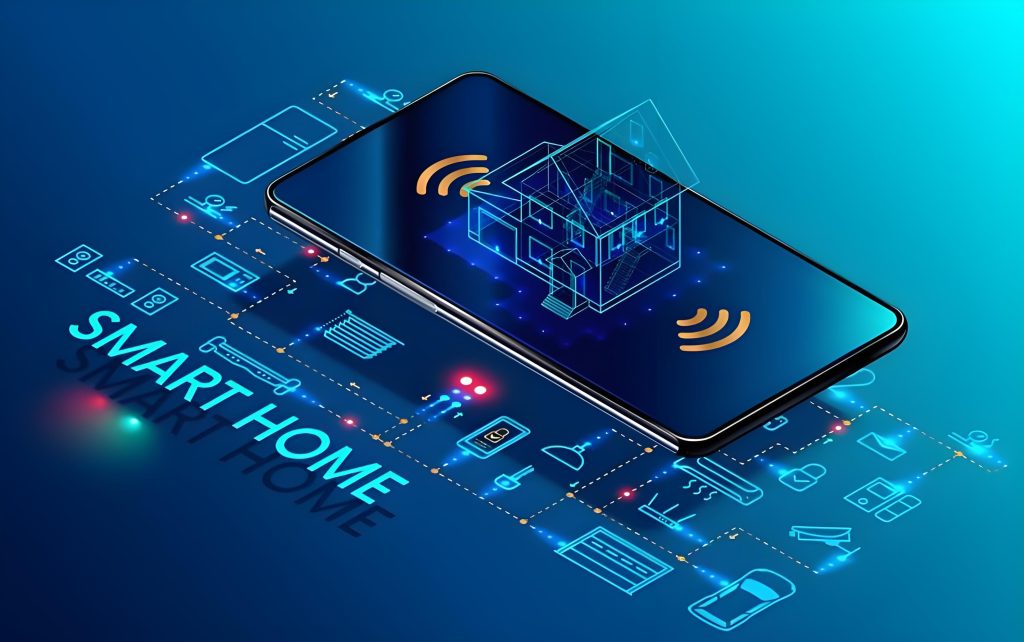
In the field of edge intelligence, mainstream edge intelligence platforms have achieved in-depth integration with Bluetooth technology. They support mainstream open-source edge AI frameworks such as Google LiteRT and TVM, and can realize seamless conversion and local deployment of deep learning models such as TensorFlow, PyTorch, and JAX. This endows chips with independent model adaptation capabilities, greatly improving the scenario-based intelligence level and independent decision-making capabilities of IoT devices, and promoting the wide application of the “end-side intelligence + near-field communication” model.
In the future, with the continuous iteration of Bluetooth technology and the continuous upgrading of hardware platforms, it will play more outstanding performance in various industry scenarios, further improve the industrial and application ecosystem, and help the high-quality development of the spatial intelligence industry.
 English
  简体中文
简体中文  Español
  العربية