MMBT2907ALT1G


PNP GP BJT, -60V, -600mA, hFE 100-300, SOT-23, AEC-Q101, fT 200MHz, complementario de MMBT2222A

4393894

Inventario efectivo
Ir a la consulta

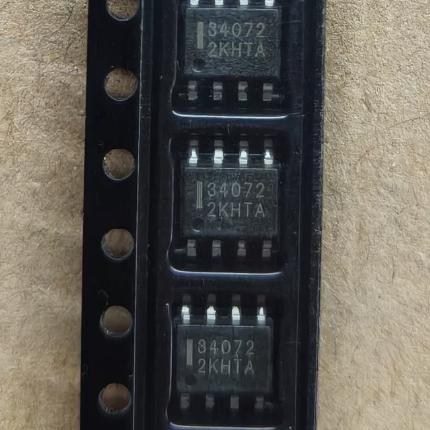
Image for reference only

Pieza del fabricante:

MMBT2907ALT1G

Paquete:

SOT-23-3 / TO-236-3 (2,9 x 1,3 x 1,0 mm)

Marca:
Otras recomendaciones que pueden interesarle.
Descripción

The MMBT2907ALT1G from onsemi is a PNP silicon general-purpose bipolar junction transistor in a SOT-23 surface-mount package (2.9 x 1.3 x 1.0 mm). It is the SMD equivalent of the classic 2N2907A through-hole PNP transistor. Key specifications: VCEO = -60V, VCBO = -60V, VEBO = -5V, IC = -600mA continuous (-1200mA peak), PC = 350mW (on FR-4 PCB), hFE = 100-300 (graded), VCE(sat) = -0.4V max at IC=-150mA/IB=-15mA, -1.6V max at IC=-500mA/IB=-50mA, fT = 200MHz. AEC-Q101 qualified and PPAP capable for automotive applications. Halogen-free and BFR-free. The -L suffix (LT1G) indicates AEC-Q101 automotive qualification. Operating temperature: -55C to 150C. Marking code: 2B. Complementary NPN device: MMBT2222A. Active product, RoHS compliant.

The MMBT2907ALT1G from onsemi is a -60V PNP silicon bipolar junction transistor (BJT) designed for general-purpose linear and switching applications in a surface-mount SOT-23 package. It is the SMD equivalent of the industry-standard 2N2907A PNP transistor, one of the most widely used small-signal PNP transistors since the 1960s. The MMBT version brings the same trusted electrical characteristics to modern surface-mount designs.

The 2N2907/2N2222 complementary pair (PNP/NPN respectively) is arguably the most classic transistor complementary pair in electronics. The MMBT2907A and MMBT2222A maintain this complementary relationship in the SOT-23 surface-mount package, enabling push-pull amplifier stages, H-bridge motor drivers, and other complementary circuit topologies in compact SMD designs.

The device is AEC-Q101 qualified, meaning it has passed the rigorous reliability testing required for automotive electronics applications, including temperature cycling, high-temperature operating life (HTOL), humidity bias, and electrostatic discharge (ESD) testing. This qualification makes the MMBT2907ALT1G suitable for under-hood automotive applications and any environment demanding high reliability.

The PNP polarity means that conventional current flows from emitter to collector when the transistor is conducting. In a typical low-side PNP switch configuration, the emitter is connected to the positive supply, the load is between the collector and ground, and the base is pulled low (below the emitter voltage by approximately 0.7V) to turn on the transistor. This is the mirror image of the more common NPN low-side switch, where the emitter is at ground and the base is driven high.

The hFE (DC current gain) ranges from 100 to 300 at IC=-10mA, VCE=-10V, providing substantial gain for small-signal applications. At higher currents (IC=-500mA), the minimum hFE drops to 50, which still provides useful gain for medium-power switching. The gain variation with current and temperature must be considered in circuit design; worst-case design should use the minimum hFE at the maximum operating current and temperature.

The transition frequency (fT) of 200MHz indicates the frequency at which the common-emitter current gain drops to unity (0dB). In practice, the useful bandwidth for amplifier applications is fT / hFE, which for hFE=100 gives approximately 2MHz. This is adequate for audio and many general-purpose applications but insufficient for RF applications above a few MHz.

The SOT-23 package is the most widely used surface-mount transistor package, with a footprint of only 2.9 x 1.3 mm. The power dissipation is limited to 350mW when mounted on a standard FR-4 PCB with recommended pad layout, due to the small thermal mass and limited heat spreading area. For higher power applications, the through-hole 2N2907A in a TO-18 or TO-92 package provides better thermal performance.

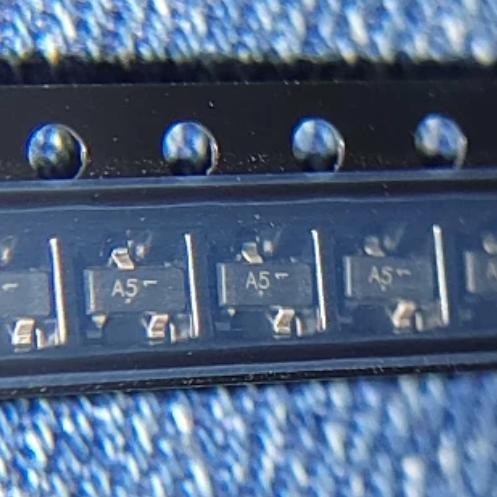
The marking code for the MMBT2907A is ‘2B’, which must be distinguished from other SOT-23 devices with similar markings. The L suffix in MMBT2907ALT1G indicates AEC-Q101 qualification, and the T1G suffix indicates tape-and-reel packaging with Pb-free termination finish.

The MMBT2907ALT1G operates as a PNP bipolar junction transistor (BJT) in the common-emitter, common-base, or common-collector configuration.

PNP BJT Structure: The transistor consists of three semiconductor layers: P-type emitter, N-type base, and P-type collector. The two PN junctions are the emitter-base junction (forward-biased in active operation) and the collector-base junction (reverse-biased in active operation). For a PNP transistor, conventional current flows from emitter to collector (opposite to the NPN direction), and the base current flows out of the base terminal.

Active Mode Operation: When the emitter-base junction is forward-biased (emitter voltage higher than base voltage by approximately 0.7V for silicon) and the collector-base junction is reverse-biased (collector voltage lower than base voltage for PNP), the transistor operates in the active region. Holes (majority carriers in the P-type emitter) are injected from the emitter into the thin N-type base region. Most of these holes (typically 98-99.7%) traverse the base without recombining and are swept into the collector by the electric field of the reverse-biased collector-base junction, forming the collector current. A small fraction of holes recombine with electrons in the base, and these electrons must be supplied by the base current, establishing the relationship IC = hFE x IB.

Saturation Mode: When the transistor is driven with sufficient base current such that IC cannot increase further (limited by the external circuit), the transistor enters saturation. In saturation, both junctions are forward-biased, VCE approaches VCE(sat) (-0.4V at IC=-150mA for this device), and the transistor acts as a closed switch. The collector current is determined by the external circuit (supply voltage and load resistance), and the base current must exceed IC/hFE to maintain saturation. The overdrive factor (IB_actual / IB_min) determines how deeply saturated the transistor is, with deeper saturation providing lower VCE(sat) but longer turn-off time.

Switching Characteristics: When switching between cutoff and saturation, the transistor passes through the active region where both VCE and IC are significant, resulting in instantaneous power dissipation (P = VCE x IC). The switching time includes: (1) delay time (td) – time from base drive application to collector current beginning to rise; (2) rise time (tr) – time for collector current to rise from 10% to 90% of final value; (3) storage time (ts) – time from base drive removal to collector current beginning to fall (related to stored charge removal from the base); (4) fall time (tf) – time for collector current to fall from 90% to 10%. For the MMBT2907A at IC=-150mA/IB=-15mA, typical switching times are: td=15ns, tr=40ns, ts=200ns, tf=40ns. The storage time is typically the dominant switching time and can be reduced by using a Baker clamp or base drive reversal.

Frequency Response: The transition frequency fT = 200MHz is the frequency at which the common-emitter current gain (hFE) drops to unity. The gain-bandwidth product is approximately constant: hFE x f = fT, so at f = 1MHz, the available gain is approximately 200 (at low currents). At higher currents and voltages, the actual fT may be lower due to transit time and capacitance effects. The Miller effect (multiplication of base-collector capacitance by voltage gain) further limits the practical bandwidth in common-emitter configurations.

Thermal Behavior: The junction temperature affects all transistor parameters: hFE increases with temperature (approximately 0.3%/C), VBE decreases with temperature (approximately -2mV/C), leakage currents increase exponentially with temperature, and VCE(sat) decreases slightly with temperature. The thermal resistance from junction to ambient (Rth j-a) is 556C/W for the SOT-23 package, meaning 350mW dissipation raises the junction temperature approximately 195C above ambient (at the thermal limit). Careful thermal design is required when operating near the maximum power dissipation.

Pin Nombre Tipo Descripción
1 Base Entrada Base terminal of the PNP transistor; current flows out of this pin to turn on the transistor; for PNP, the base must be approximately 0.7V below the emitter voltage to forward-bias the emitter-base junction; input impedance is moderate (typically 1-10kohm depending on operating point); connect through a current-limiting resistor from the driving circuit
2 Emisor E/S Emitter terminal of the PNP transistor; typically connected to the positive supply rail in common-emitter configuration; conventional current flows into this pin during conduction; the emitter current equals the sum of collector and base currents (IE = IC + IB)
3 Colector Salida Collector terminal of the PNP transistor; current flows out of this pin to the load in common-emitter configuration; in saturation, the collector voltage approaches the emitter voltage minus VCE(sat); in cutoff, the collector voltage is determined by the external circuit
Aplicación Descripción
Amplificador Push-Pull complementario Use with MMBT2222A (NPN) as complementary output pair; MMBT2907A handles positive half-cycles and MMBT2222A handles negative half-cycles (or vice versa depending on topology); matched VBE and hFE characteristics simplify bias design; audio frequency operation well within fT bandwidth
High-Side Load Switch PNP transistor as high-side switch with emitter at VCC and load between collector and ground; base pulled low to turn on; suitable for switching loads up to 600mA from positive supply; AEC-Q101 qualification for automotive relay and lamp control
Current Mirror (PNP) Use two matched MMBT2907A devices to form a PNP current mirror; base and emitter connected in parallel, with one device diode-connected; mirror accuracy depends on hFE matching; useful in bias networks and active loads for differential amplifiers
Level Shifting Shift logic levels between different voltage domains using PNP common-base or common-emitter configurations; e.g., convert 5V logic to 3.3V logic or shift between positive and negative supply rails; 200MHz fT supports fast edge rates
Automotive Signal Conditioning AEC-Q101 qualified device suitable for automotive sensor interfaces and signal conditioning; -60V rating provides margin for automotive load dump transients with proper protection; SOT-23 package enables compact module designs
Modelo Fabricante Compatibilidad Diferencia clave
2N2907A onsemi Equivalente de orificio pasante Same die in TO-18 or TO-92 package; higher power dissipation (600mW vs 350mW); through-hole mounting; identical electrical characteristics; use when SMD is not required or higher dissipation is needed
MMBT2907A onsemi Lo mismo sin Automotive Qual Mismo dispositivo sin cualificación AEC-Q101 (sufijo no L); menor coste para aplicaciones no automovilísticas; idénticas características eléctricas y mecánicas; uso cuando no se requiere cualificación automovilística.
BC856B Nexperia Funcionalmente similares PNP general-purpose transistor; -65V, -100mA (lower current); SOT-23; different hFE range (220-475 for B suffix); lower current but higher gain; different pinout (EBC vs BEC); not pin-compatible
FMMT591 Diodos Inc Funcionalmente similares PNP transistor; -60V, -2A (higher current); SOT-23; higher power dissipation (625mW); for applications exceeding 600mA; different hFE range
MMBT2222ALT1G onsemi NPN complementario NPN complementary device; 40V, 600mA; same SOT-23 package; same AEC-Q101 qualification; use together for push-pull, H-bridge, and complementary circuit topologies
Recomendar piezas
Single 2-input OR gate, UHS TinyLogic, 1.65-5.5V, 2.4ns, SOT-23-5

Marca:

Paquete:

SOT-23-5 (3.0 x 1.5 x 0.95 mm)
En stock:
15000 piezas

Ciclo de carga: 3~7 días
El pedido mínimo es de 1

Ir a la consulta
P-Channel MOSFET, -50V, -130mA, 10 Ohm RDS(on), SOT-23, logic level

Marca:

Paquete:

SOT-23-3 (2.9 x 1.3 x 1.0 mm)
En stock:
4891pcs

Ciclo de carga: 3~7 días
El pedido mínimo es de 1

Ir a la consulta
1.5W 18V Zener diode, SMA package, 5% tolerance, AEC-Q101, ESD Class 3

Marca:

Paquete:

SMA (DO-214AC) (4.32 x 2.6 x 2.0 mm)
En stock:
7948pcs

Ciclo de carga: 3~7 días
El pedido mínimo es de 1

Ir a la consulta
1A, 1000V standard recovery rectifier, SMA package, glass passivated

Marca:

Paquete:

SMA (DO-214AC), 2.60 x 5.10 x 1.00 mm
En stock:
2409 piezas

Ciclo de carga: 3~7 días
El pedido mínimo es de 1

Ir a la consulta
3-pin uP reset monitor, push-pull RESET, 4.63V threshold, SOT-23

Marca:

Paquete:

SOT-23-3
En stock:
3824 piezas

Ciclo de carga: 3~7 días
El pedido mínimo es de 1

Ir a la consulta
Dual bipolar op-amp, 4.5MHz GBW, 13V/μs slew, 3-44V single supply, SOIC-8

Marca:

Paquete:

SOIC-8 (3.9 x 4.9 x 1.5mm)
En stock:
3480pcs

Ciclo de carga: 3~7 días
El pedido mínimo es de 1

Ir a la consulta
Garantía de calidad

Todos los componentes electrónicos que obtenemos de nuestras cadenas de suministro asociadas se someten a estrictas inspecciones de entrada. Mediante pruebas minuciosas, nos aseguramos de que todo lo que se entrega a los clientes son piezas originales genuinas y cumple los requisitos de calidad. Además, mantenemos registros de inspección completos para que todo el proceso de la cadena de suministro sea claro y rastreable.

Certificación
Hemos obtenido una serie de certificaciones profesionales y construido nuestro propio laboratorio de pruebas profesional.Esto asegura que cada producto que entregamos a nuestros clientes cumple con los más altos requisitos de calidad.Llevamos a cabo pruebas en estricta conformidad con los procedimientos para garantizar la calidad del producto estable y parámetros precisos.Para garantizar piezas originales genuinas, también cooperamos con instituciones de pruebas de terceros confiables para la inspección de calidad estricta.Siempre damos gran importancia a la calidad y cumplimos plenamente con las normas de la industria, los reglamentos pertinentes y los requisitos de la norma ISO 9001:2015.

Envíos y pagos

Todos los componentes electrónicos que obtenemos de nuestras cadenas de suministro asociadas se someten a estrictas inspecciones de entrada. Mediante pruebas minuciosas, nos aseguramos de que todo lo que se entrega a los clientes son piezas originales genuinas y cumple los requisitos de calidad. Además, mantenemos registros de inspección completos para que todo el proceso de la cadena de suministro sea claro y rastreable.

Certificación
Hemos obtenido una serie de certificaciones profesionales y construido nuestro propio laboratorio de pruebas profesional.Esto asegura que cada producto que entregamos a nuestros clientes cumple con los más altos requisitos de calidad.Llevamos a cabo pruebas en estricta conformidad con los procedimientos para garantizar la calidad del producto estable y parámetros precisos.Para garantizar piezas originales genuinas, también cooperamos con instituciones de pruebas de terceros confiables para la inspección de calidad estricta.Siempre damos gran importancia a la calidad y cumplimos plenamente con las normas de la industria, los reglamentos pertinentes y los requisitos de la norma ISO 9001:2015.

Servicio y embalaje

Todos los componentes electrónicos que obtenemos de nuestras cadenas de suministro asociadas se someten a estrictas inspecciones de entrada. Mediante pruebas minuciosas, nos aseguramos de que todo lo que se entrega a los clientes son piezas originales genuinas y cumple los requisitos de calidad. Además, mantenemos registros de inspección completos para que todo el proceso de la cadena de suministro sea claro y rastreable.

Certificación
Hemos obtenido una serie de certificaciones profesionales y construido nuestro propio laboratorio de pruebas profesional.Esto asegura que cada producto que entregamos a nuestros clientes cumple con los más altos requisitos de calidad.Llevamos a cabo pruebas en estricta conformidad con los procedimientos para garantizar la calidad del producto estable y parámetros precisos.Para garantizar piezas originales genuinas, también cooperamos con instituciones de pruebas de terceros confiables para la inspección de calidad estricta.Siempre damos gran importancia a la calidad y cumplimos plenamente con las normas de la industria, los reglamentos pertinentes y los requisitos de la norma ISO 9001:2015.